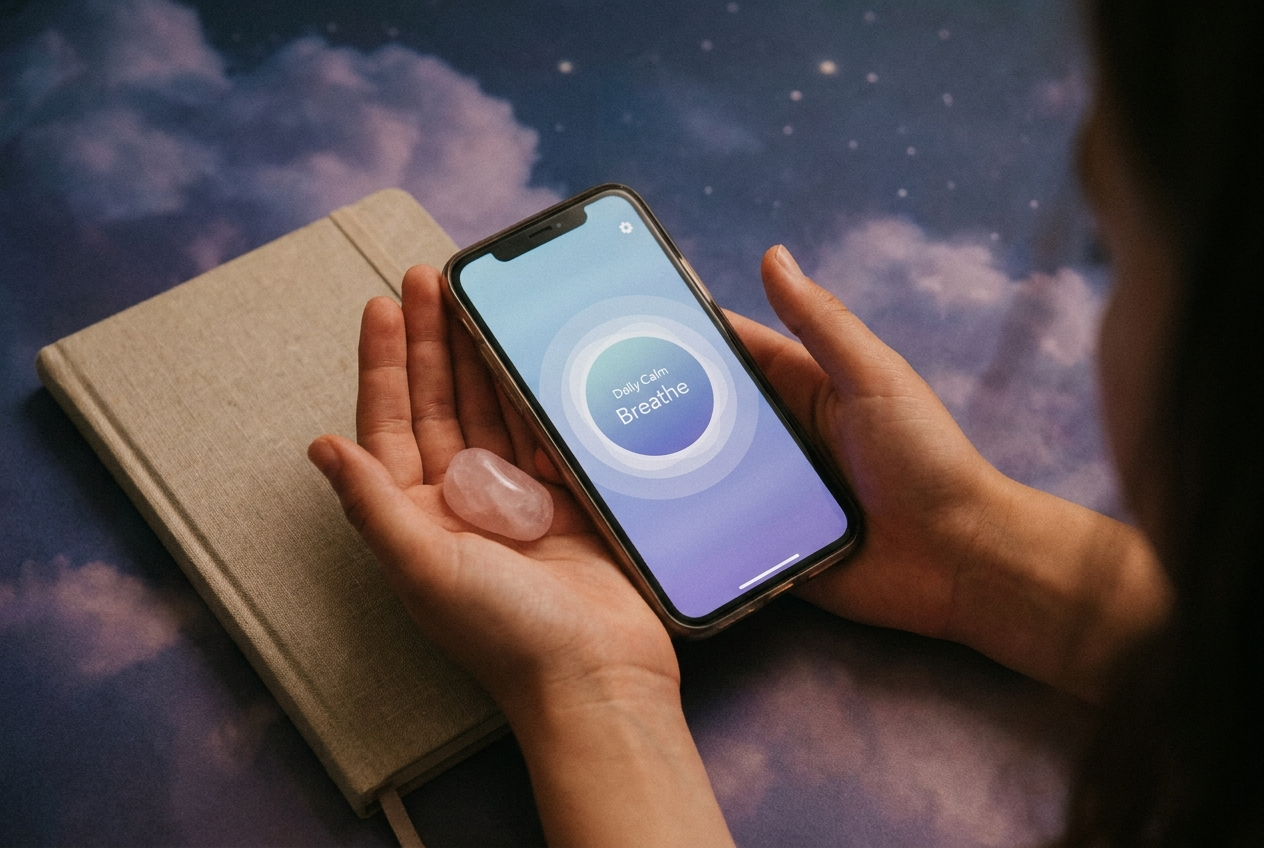
7 Big Trends in Gen Z Spirituality in 2026
More Gen Z users are searching for spirituality today than they were five years ago. But unlike previous generations, they are not necessarily returning to organized religion.
Instead, they are building highly personal spiritual systems shaped by meditation apps, social media creators, healing retreats, astrology, mindfulness, and mental wellness culture.
What makes this shift interesting is that it is happening in a generation raised almost entirely online. In 2025, spirituality for Gen Z often looks less like tradition and more like self-discovery, emotional regulation, and inner stability.
The Essential Takeaway
Gen Z spirituality is not a return to traditional religion. It is a shift toward personalized inner practices designed to reduce stress, improve emotional well-being, and create meaning in a fast-moving digital world. In 2026, rising interest in meditation, mindfulness apps, yoga retreats, astrology, sound healing, and spiritual creators reflects this trend.
Many Gen Z users describe themselves as “spiritual but not religious,” meaning they seek personal experiences over institutional belief systems. Social media platforms like TikTok and YouTube have accelerated discovery, while burnout, loneliness, and anxiety are pushing younger audiences toward practices that promise calmness, self-awareness, and emotional grounding.
Trend 1: Personalized Spirituality Is Replacing Rigid Religious Identity
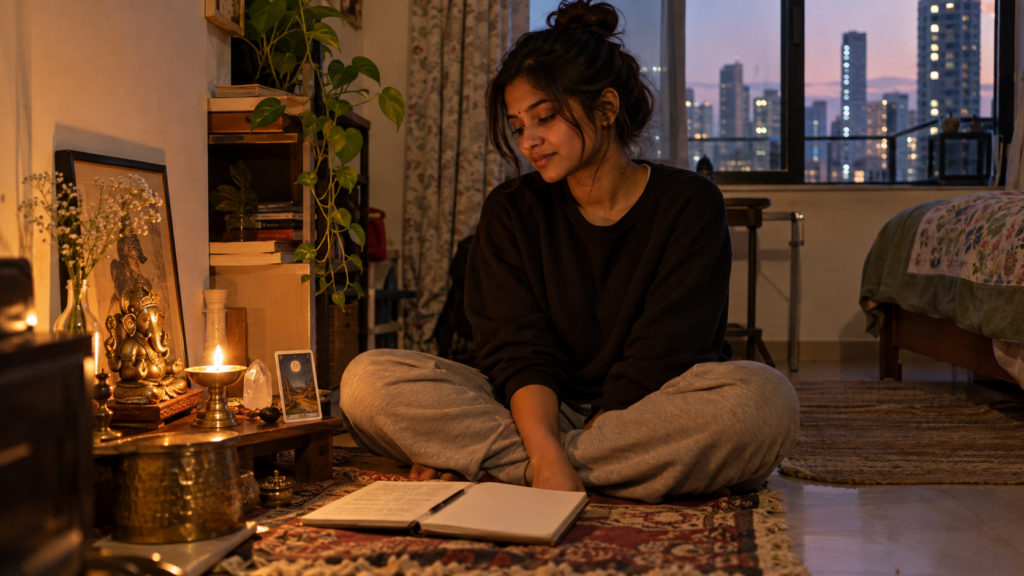
One of the biggest shifts in Gen Z spirituality is personalization.
Instead of following a single structured belief system, many younger people are combining practices from different traditions.
Meditation, manifestation, yoga, journaling, astrology, mindfulness, and breathwork are often blended into one highly personal spiritual routine.
“Spiritual but not religious” refers to people who pursue personal meaning, inner growth, or transcendent experiences without formally identifying with a religious institution.
A Harris Poll of 2,136 US adults, conducted July 1–4, 2026, found that 33% of Gen Z describe themselves as religious, more than millennials (19%), Gen X (22%) or boomers (18%). Yet 88% of Gen Z take part in at least one spiritual practice, from prayer and scripture to meditation, astrology and tarot.
The Harris Poll’s chief strategy officer described the pattern as stacking rather than choosing: “Church on Sunday, manifestation on Wednesday, tarot on Friday.”
Young Indians describe the same shift in their own words. Speaking to The Week, 23-year-old cabin crew member Anahat Singh put it this way:
“My parents’ generation observe faith like brushing their teeth twice a day.” — Anahat Singh, quoted in The Week, March 16, 2025.
What makes this trend important is that Gen Z is not rejecting meaning itself. They are rejecting systems that feel emotionally disconnected from modern life.
Sadhguru has repeatedly spoken about this shift:
“This generation is not willing to believe something simply because somebody said so. They want experience.”
That explains why experience driven spirituality is growing faster than ritual based participation among younger audiences.
Trend 2: Spirituality Is Becoming a Tool for Stress Relief and Emotional Regulation
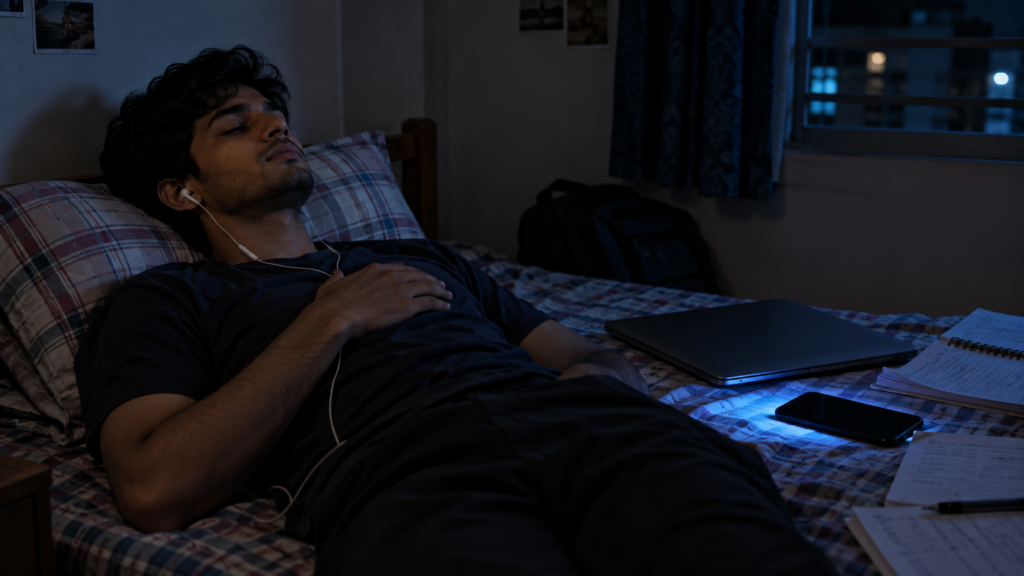
Burnout is one of the biggest reasons Gen Z is exploring spirituality.
In 2024, the American Psychological Association reported that Gen Z adults consistently showed higher stress levels than older generations.
Many younger people describe feeling overstimulated, emotionally exhausted, and mentally scattered. That creates demand for practices that slow the mind down.
Also, the same Harris Poll found 57% of Gen Z agree they use practices such as manifestation or spirituality to feel greater control over their future.
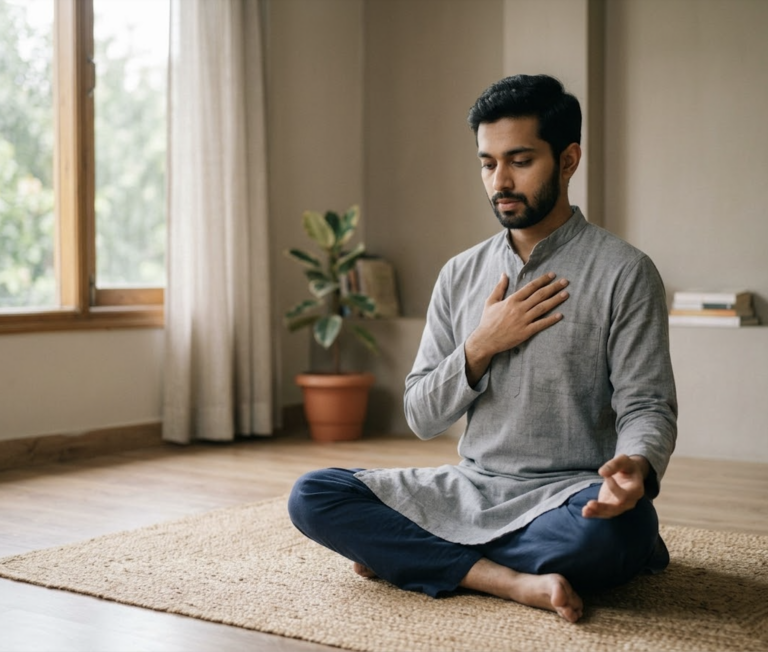
Meditation, breathwork, yoga, journaling, and silent retreats are increasingly being used not as religious activities but as emotional coping tools. Premanand Maharaj explains this idea very directly:
“A restless mind cannot experience peace, no matter how much comfort surrounds it.”
Kulwinder, who has written extensively about meditation and mindfulness practices for The Inner Path, notes that many beginners are not searching for enlightenment initially.
They are searching for relief. That distinction matters. For Gen Z, spirituality is often practical before it becomes philosophical.
Claims about decalcifying the pineal gland circulate widely for stress relief. We checked what the research actually found, and the answer is more interesting.
Trend 3: Social Media Has Become the New Spiritual Discovery Platform
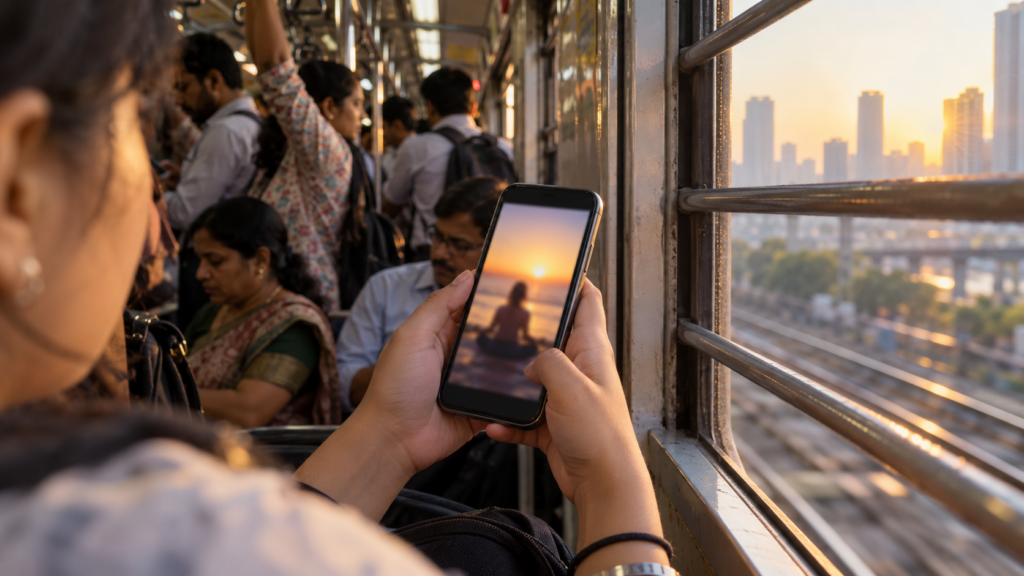
Social media is now one of the biggest gateways into spirituality.
In previous generations, spiritual learning usually happened through family traditions, books, temples, or teachers. In 2025, it often begins with a short TikTok clip or YouTube video.
Younger users are discovering guided meditation, nervous system education, manifestation techniques, astrology, yoga philosophy, and mindfulness creators through algorithm driven feeds.
India’s influencer industry has noticed. Sahil Chopra, chairman of the Indian Influencer Governor Council, told The Week that spiritual creators now deliver “complex spiritual concepts through bite-sized reels.”
YouTube channels focused on meditation and spirituality have also seen rapid audience growth over the last few years.
The downside is that social media can oversimplify spiritual ideas into aesthetic trends. What most articles miss about Gen Z spirituality is that social media is acting both as a teacher and a filter. It introduces spirituality quickly, but often without depth.
That is why many Gen Z users eventually move from online content toward retreats, communities, or long form teachings.
Trend 4: Wellness Practices Are Becoming Spiritual Practices
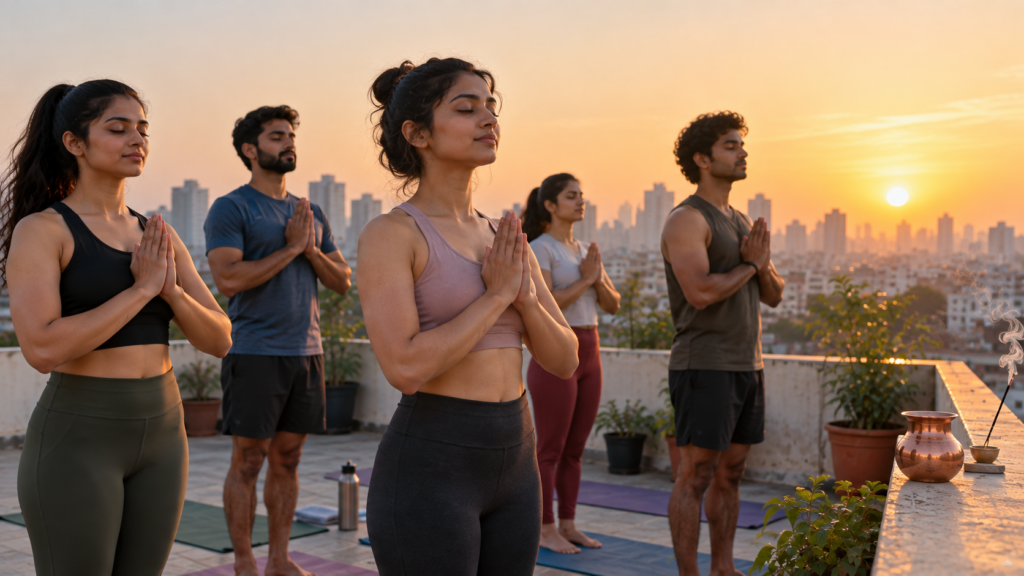
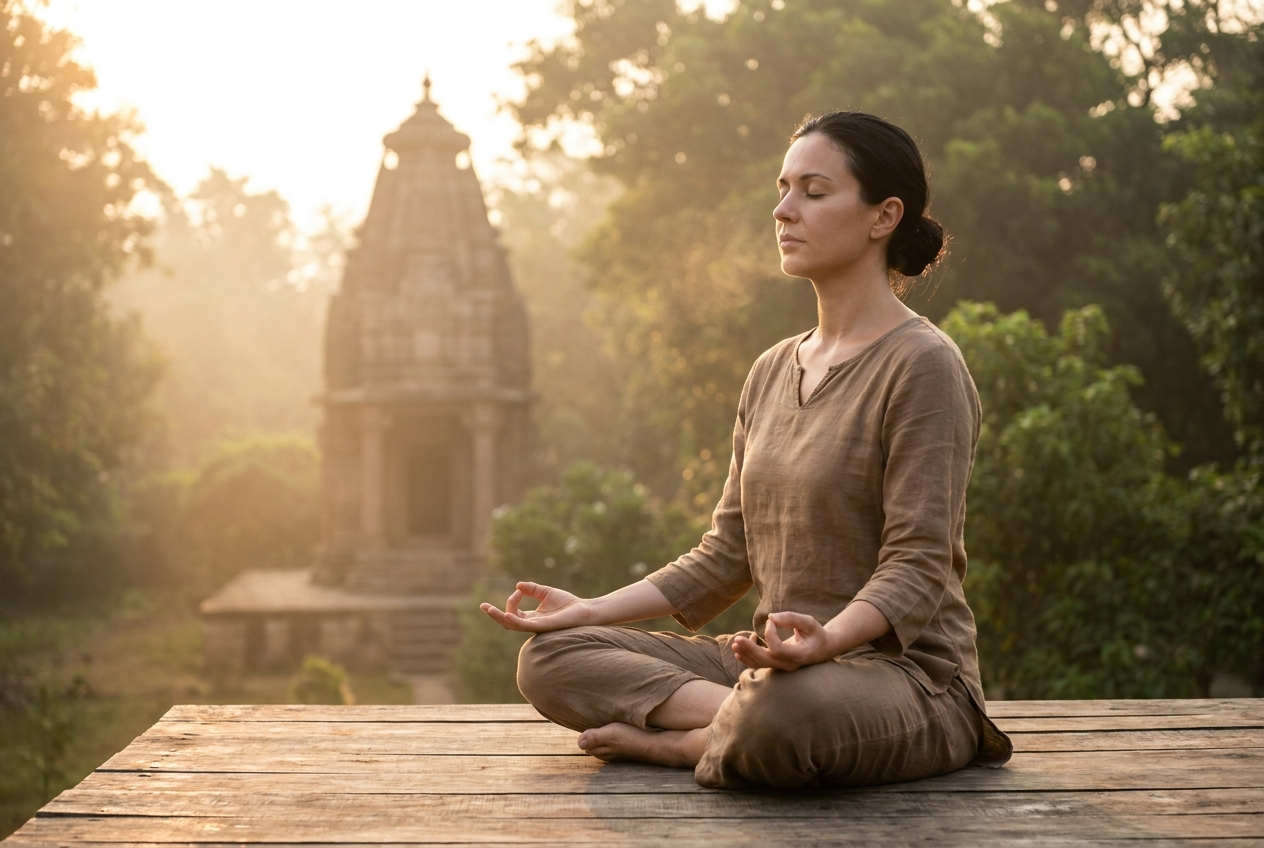
Meditation is probably the most visible spiritual practice among Gen Z today.
But it is far from the only one. Breathwork, journaling, yoga, sound baths, manifestation rituals, tarot reading, and mindfulness apps are all growing rapidly among younger users.
A 2025 Global Wellness Institute report showed continued growth in wellness practices centered around mental and emotional recovery. What makes this trend unique is how naturally younger audiences combine different practices.
Someone may use meditation for anxiety, astrology for self reflection, journaling for emotional processing, and yoga for nervous system regulation without seeing any contradiction. Sri Sri Ravi Shankar has often connected spirituality with emotional balance rather than ideology:
“Spirituality is not about labels. It is about the quality of your inner experience.”
That may be the simplest explanation for why these practices are spreading. The motivation is not religion. It is emotional well being.
Trend 5: Retreat Culture and Spiritual Travel Are Growing Rapidly
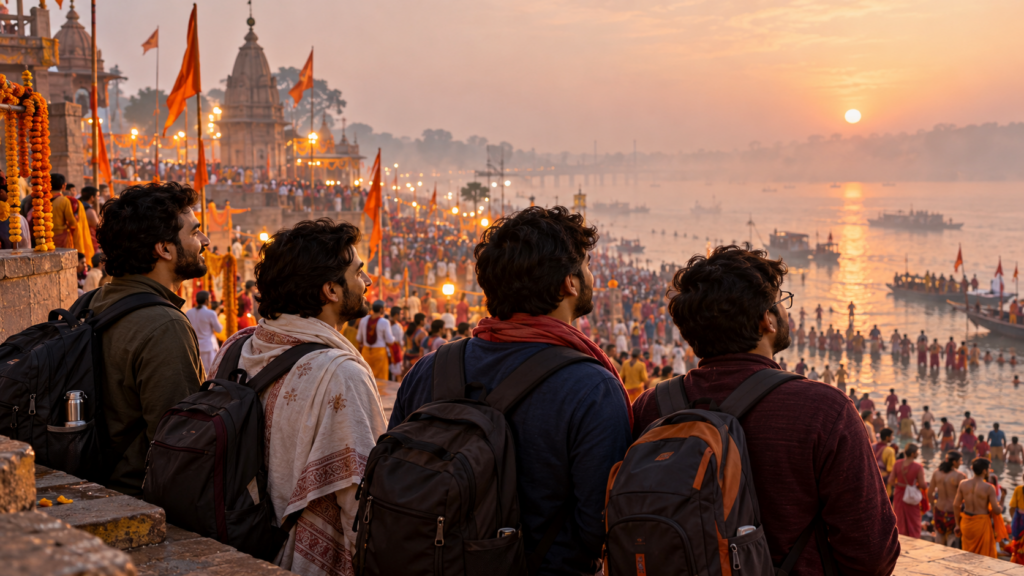
Younger audiences are showing growing interest in meditation retreats, yoga centers, silent retreats, wellness festivals, and spiritual travel experiences. This is especially noticeable in places like Rishikesh, Dharamshala, Bali, and Auroville.
Unlike older generations, Gen Z often approaches these spaces less through devotion and more through curiosity, healing, and emotional reset.
Many younger travelers now prioritize digital detox, nervous system recovery, emotional clarity, and slower environments. In many cases, retreats are replacing vacations.
Booking.com’s Travel Predictions 2026, based on 29,733 travelers in 33 countries and territories, found 53% of Gen Z consider mystical or spiritual influences when planning a trip, compared with 46% of millennials.
In India, the pull is toward pilgrimage. The Week reported that researchers at the Govind Ballabh Pant Social Science Institute documented more people aged 18 to 35 at the Mahakumbh.
One 29-year-old from Noida, Dheeraj Chauhan, described his group’s trip:
“We were a bunch of boys out on a trip, but the mood was certainly spiritual.” — Dheeraj Chauhan, quoted in The Week, March 16, 2025
Many first time retreat participants are surprised by how strongly silence affects them emotionally. That emotional impact is one reason these experiences continue growing through word of mouth.
At the far end of the same impulse sits Kurmagram, a village in Andhra Pradesh where around eighty people live without electricity or phones, not because they never had them but because they gave them up.
Trend 6: Technology and AI Are Becoming Part of Spiritual Practice
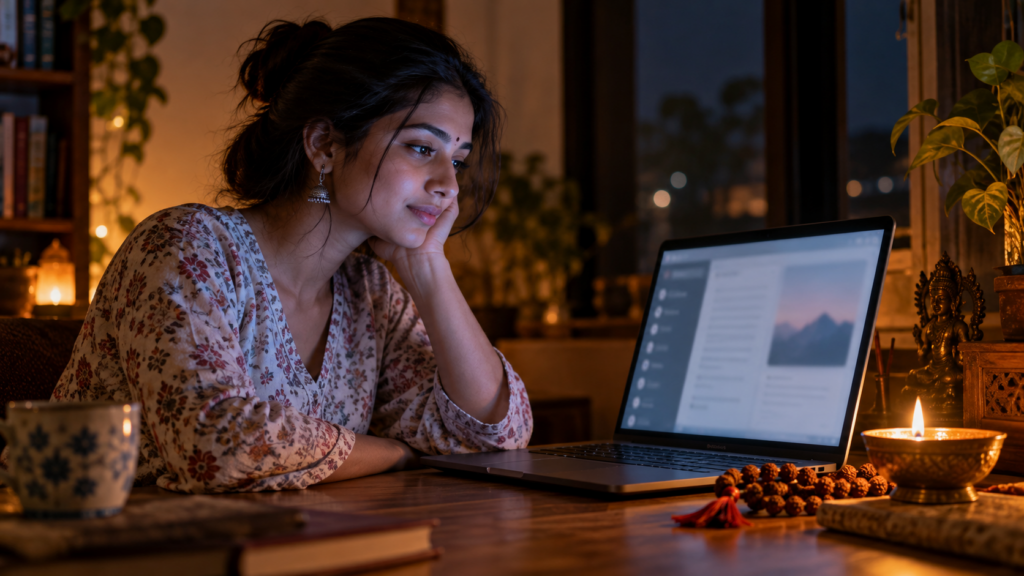
Technology is no longer separate from spirituality.
For Gen Z, spiritual practice often happens through meditation apps, AI journaling tools, astrology apps, breathwork trackers, YouTube meditations, and ambient healing playlists. This creates a new kind of spirituality. One that is deeply digital but still emotionally personal.
Apps like Calm and Headspace normalized meditation for millions of younger users over the last few years. AI is now entering the space too.
People increasingly use AI tools for tarot interpretation, journaling prompts, self reflection exercises, and meditation guidance. What most articles miss about Gen Z spirituality is that technology is not replacing spirituality.
It is becoming the delivery system for it. That changes how spiritual habits are formed. In 2026, many people encounter mindfulness through an app long before they encounter it through a teacher.
Trend 7: Community Based Spiritual Experiences Are Replacing Traditional Ritual Spaces
Gen Z spirituality is not entirely individual.
Many younger people are actively searching for emotional connection and collective experiences, but without the pressure often associated with traditional religious structures.
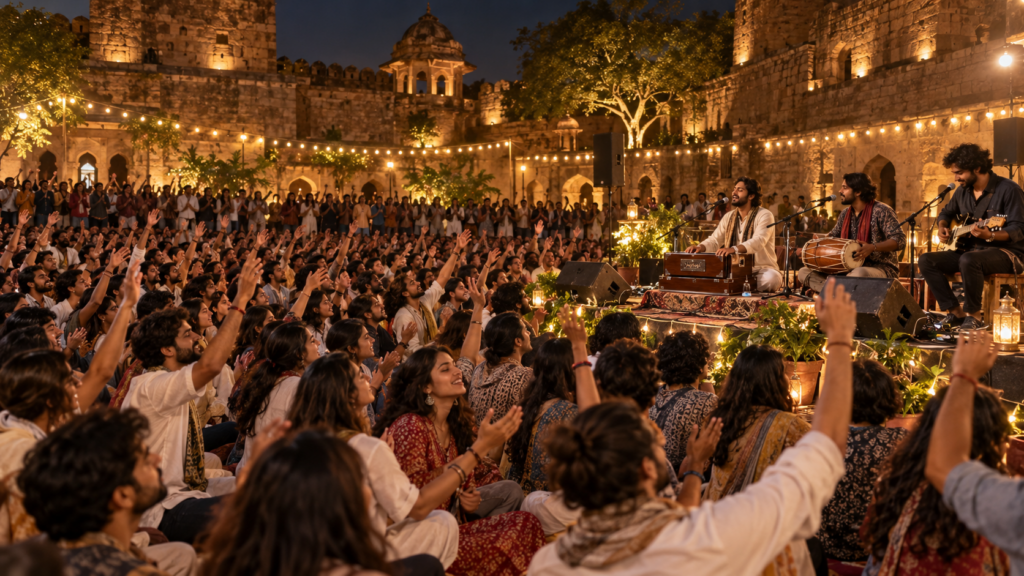
This has led to the rise of bhajan clubbing, sound healing gatherings, conscious music events, community meditation circles, and wellness festivals. These experiences combine music, mindfulness, spirituality, and social connection.
For many younger participants, the attraction is not doctrine.
It is belonging. What makes this trend important is that spirituality is becoming less private and more socially expressive again, but in a completely different format than previous generations experienced.
The Harris Poll found 60% of Gen Z agree they belong to more in-person communities than before. In India, the clearest example is bhajan clubbing: devotional music performed with modern instruments, drawing crowds that look like concerts but behave like satsangs.
We told the story of one of the groups behind this movement in a separate article – the Backstage Siblings, who traded stocks for bhajans.
In March 2026, AFP reported one such event drawing 7,000 people to Delhi’s 16th-century Purana Qila.
Festival organizer Nikunj Gupta, 26, summed up the idea: “We want the youth to be high on spirituality, not spirits.” — quoted by AFP via Malay Mail, March 31, 2026
The common thread across all seven trends is emotional grounding. Whether through meditation apps, retreats, music gatherings, or mindfulness creators, younger audiences are searching for ways to feel calmer, more connected, and emotionally steady in an overstimulated world.
Summary: 7 Key Facts About Gen Z’s Spiritual Shift
| Trend | What It Looks Like | Why It’s Happening |
|---|---|---|
| Personalized Beliefs | Mixing meditation, crystals, and manifestation | Rejection of rigid religious structures |
| Digital Discovery | Learning via Instagram, YouTube, TikTok | Accessible, relatable content creators |
| Experience over Ritual | Choosing ashrams and silent retreats over temple visits | Seeking direct, personal emotional grounding |
| Tech Integrated Practice | Using meditation apps and AI astrology tools | Fitting spirituality into a digital first lifestyle |
| Burnout Driven | Using spirituality to cope with anxiety and pressure | Need for practical stress management tools |
| Social Spirituality | Attending bhajan clubbing and sound healing events | Combining community, music, and mindfulness |
| Focus on Self | Practices centered on self awareness and healing | Shift from external worship to internal discovery |
FAQs on Gen Z Spirituality in India
What does “spiritual but not religious” mean?
It usually means someone seeks personal growth, meaning, or inner peace without formally following one organized religion. Many Gen Z users combine practices from different traditions instead of identifying with one doctrine.
Why is Gen Z becoming more spiritual in 2026?
Gen Z isn’t necessarily more religious, but it is more actively spiritual. A July 2026 Harris Poll found 88% of US Gen Z adults practice at least one spiritual activity, often mixing prayer with meditation, astrology or tarot.
Is social media increasing interest in spirituality?
Yes. Platforms like TikTok, YouTube, and Instagram are major discovery channels for meditation, mindfulness, yoga philosophy, astrology, and healing practices.
Are meditation retreats becoming more popular with younger people?
Yes. In 2025 and 2026, wellness retreats, silent retreats, and ashram visits have become increasingly popular among younger travelers seeking emotional reset and digital detox experiences.
What are the most popular spiritual practices among Gen Z?
Meditation, breathwork, journaling, yoga, astrology, sound healing, and mindfulness apps are among the fastest growing spiritual practices among younger audiences.
Is Gen Z rejecting religion completely?
No. A 2026 Harris Poll found a third of US Gen Z call themselves religious, more than any older generation, though Pew Research found young adults’ religious identity has held steady rather than risen since 2020.
How could this shape the future of spirituality?
Gen Z’s relationship with spirituality looks very different from previous generations. It is less about rigid identity and more about emotional grounding, self awareness, and direct experience.
Whether through meditation apps, ashram visits, sound healing, or mindfulness creators, younger audiences are searching for something deeper than constant stimulation. And in many ways, that search may define the next phase of modern spirituality.
Explore more conscious living, mindfulness, and spiritual culture insights on The Inner Path.
References
Sadhguru / Isha Foundation. (2013, September 19). What is spirituality?. https://isha.sadhguru.org/in/en/wisdom/article/what-is-spirituality
Google Trends. (n.d.). Meditation search trend data. https://trends.google.com/trends/explore?q=meditation
American Psychological Association. (2024). Stress in America 2024. https://www.apa.org/pubs/reports/stress-in-america/2024
Killingsworth, M. A., & Gilbert, D. T. (2010, November 12). A wandering mind is an unhappy mind. Science, 330(6006), 932. https://www.science.org/doi/10.1126/science.1192439
YouTube Culture & Trends Report. (2024). Wellness & mental health creator trends. https://www.youtube.com/trends/articles/wellness-trends-2024/
Global Wellness Institute. (2025, October 30). 2025 global wellness economy monitor. https://globalwellnessinstitute.org/industry-research/2025-global-wellness-economy-monitor/
Booking.com. (2025). Travel predictions 2025 report.
Sri Sri Ravi Shankar / Art of Living. (2024, June 30). What is meditation?: Meditation, benefits, how to meditate & types. https://www.artofliving.org/in-en/meditation
Premanand Maharaj Satsang Archive (Bhajan Marg Official Channel). (n.d.). Bhajan Marg – YouTube. https://www.youtube.com/@BhajanMarg/videos
The Harris Poll via International Business Times, “Gen Z Most Likely to Call Themselves ‘Religious,’ But They’re Mixing in Tarot Too” (September 26, 2026) https://www.ibtimes.com.au/gen-z-religious-spiritual-practices-harris-poll-1875870
The Daily Signal, “Poll Shows Spiritual Revival Among Gen Z” (September 24, 2026) — generational comparison figures https://www.dailysignal.com/2026/09/24/poll-shows-spiritual-revival-gen-z/
Pew Research Center, “Is There a Religious Revival Among Young US Adults? Recent Polls Suggest Stability Since 2020” (December 8, 2025) https://www.pewresearch.org/religion/2025/12/08/religion-holds-steady-in-america/
Booking.com, “The Era of YOU: Booking.com Predicts the Top Trends Defining Travel in 2026” (October 15, 2025)https://news.booking.com/the-era-of-you-bookingcom-predicts-the-top-trends-defining-travel-in-2026-with-individuality-taking-center-stage/
The Week, “Young India is turning spiritual, and it is good business” (March 16, 2025)https://www.theweek.in/theweek/cover/2025/03/15/young-indians-embracing-spirituality.html
AFP via Malay Mail, “High on spirituality, not spirits: India’s youth embrace bhajan clubbing” (March 31, 2026)https://www.malaymail.com/news/life/2026/03/31/high-on-spirituality-not-spirits-indias-youth-embrace-bhajan-clubbing-over-alcohol-fuelled-parties/214538




6 Comments