The 11 Minute Miracle Breathwork
Imagine a practice that takes just 11 minutes a day yet produces profound shifts in your mental, emotional, and physical state. Thousands of people describe it as a “rebirth,” a “spiritual awakening,” or even “seeing God”.
The 11 Minute Miracle Breathwork is a structured technique that combines ancient yogic pranayama with modern understanding of the nervous system. Practitioners report reduced anxiety, better sleep, emotional release, and access to higher states of consciousness – all from 11 minutes of conscious breathing.
This article explores what the 11 Minute Miracle is, how it works, and whether it might be right for you.
What is the 11 Minute Miracle Breath work Technique?
The 11 Minute Miracle Breathwork is a structured practice derived from yogic pranayama and Kriya Yoga traditions, designed to produce rapid shifts in mental, emotional, and physical states through conscious connected breathing.
The technique was developed by Michael Brian Baker, founder and CEO of The Breath Center. According to his profile on The Shift Network, Baker has spent nearly 20 years at the intersection of modern science and universal wisdom traditions, including yogic pranayama, Western physiology, South American entheogens, harmonic frequencies, and sound healing.
The “miracle” in the name refers to the rapid and profound changes practitioners report. The Breath Center’s official syllabus describes that participants experience “deep healing, expanded awareness, increased vitality, and a new sense of purpose.”
How Does the 11 Minute Miracle Breathwork affects the Body?
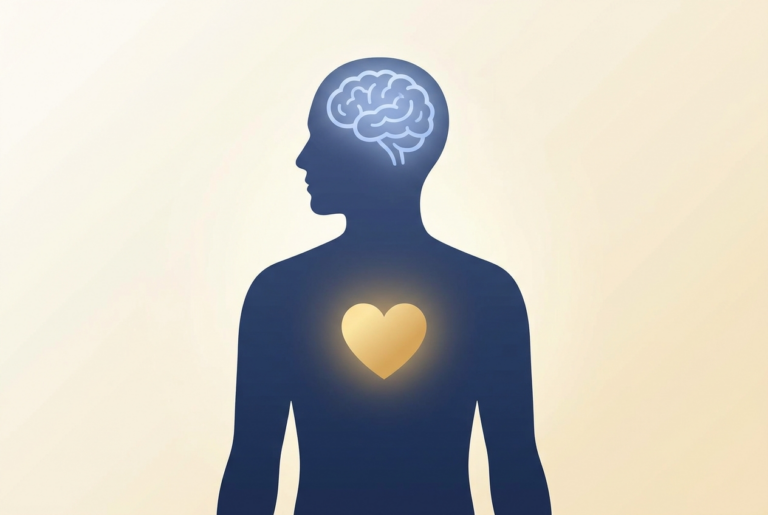
The practice works by consciously regulating breath patterns to activate the parasympathetic nervous system and stimulate the vagus nerve, which connects the brain to major organ systems.
Research published in Frontiers in Psychology confirms that the vagus nerve serves as a cornerstone for mental health and performance optimization. The study explains that vagal nerve activity enables two-way communication between the heart and brain, allowing the body to engage in an adaptive stress response.
A separate study from Lindenwood University on resonant breathwork found that slow, conscious breathing practices serve as multimodal vagal-interoceptive modulation, directly influencing how the body processes stress and regulates emotion.
The Breath Center syllabus outlines that the technique involves specific patterns of inhalation, exhalation, and breath retention designed to increase oxygenation throughout the body, regulate the vagus nerve, and help release unresolved emotions stored in the body.
According to The Shift Network course page, practitioners report that the breath can “break cycles of insomnia, reduce inflammation, dissolve anxiety and calm your overactive mind.”
What Are the Scientific Benefits of This Breathwork Practice?
Research confirms that conscious breathwork techniques can reduce chronic stress, anxiety, and depression symptoms, serving as both a preventive and adjunctive therapy for mental health conditions.
A 2025 study published in the journal Healthcare (MDPI) examined a somatic psychoeducational intervention integrating breathwork. The researchers found that the intervention was associated with increased oxytocin levels, improved autonomic function, and reduced psychological distress symptoms, with benefits sustained at one month follow up.
Another 2025 study published in PLOS Mental Health examined the efficacy of transformational breath for anxiety management. The research focused on professional voice users and found significant benefits for anxiety reduction through structured breathwork protocols.
A 2023 study published in Nature (Communications Psychology) investigated how decreased CO2 saturation during circular breathwork supports the emergence of altered states of consciousness, providing a physiological mechanism for the profound experiences reported by practitioners.
The Breath Center syllabus also notes that breathwork has been shown to help with “addiction, anxiety, depression, anger, PTSD, and insomnia.”
How Is the 11 Minute Miracle Different From Regular Pranayama?
While pranayama focuses on controlling the breath through specific counts and holds, the 11 Minute Miracle emphasizes conscious connected breathing as a means of accessing higher states of consciousness and facilitating deep emotional release.
Michael Brian Baker draws directly from yogic pranayama traditions. According to The Shift Network faculty page, his work is rooted in “Yogic Philosophy & Terminology” alongside “Anatomy & Physiology of Respiration,” showing how the practice bridges Eastern and Western approaches.
The Breath Center syllabus explicitly lists “Yogic Philosophy & Terminology” and “Eastern & Western Breath Approaches” as core course components, indicating that the technique respects traditional roots while adapting them for modern practitioners.
Key differences include that traditional pranayama focuses on control and specific counts, while the 11 Minute Miracle focuses on flow and emotional release. Traditional practices may require years to master, while this technique is designed for beginners.
Baker is recognized as a trusted leader in breathwork education, with his work rooted in “Yogic Philosophy, Healing Arts, Indigenous Ceremony, and Meditation & Pranayama Facilitation.”
What Do People Experience During and After the Practice?
Practitioners report a wide range of experiences from physical sensations and emotional releases to altered states of consciousness, with many describing profound spiritual awakenings.
According to The Shift Network faculty page, “Thousands have called this life-changing work the most profound experience of their lives, likening it to a rebirth, spiritual awakening, peak experience, realization of their true self, or ‘seeing God’.”
During the practice, participants may experience physical sensations such as tingling, warmth, or energy moving through the body; emotional releases including crying, laughter, or feelings of peace; altered states such as expanded awareness or sense of connection; and mental shifts including quieting of internal dialogue.
After consistent practice, reported outcomes include reduced anxiety, improved sleep, emotional resilience, addiction recovery, and spiritual awakening.
The Breath Center syllabus adds that reports of lasting change and, in many cases, “the elimination of stubborn challenges such as addiction, anxiety, depression, anger, PTSD, and insomnia are common” among participants.
Is the 11 Minute Miracle Safe for Everyone?
While generally safe for healthy individuals, certain people should avoid intense breathwork or practice only under professional guidance.
The Breath Center has facilitated thousands of participants over more than 12 years. However, circular or connected breathing techniques can produce strong physical and emotional reactions.
Based on standard breathwork contraindications, the practice is not recommended for pregnant women (especially in first trimester), people with epilepsy or seizure disorders, those with uncontrolled high blood pressure or recent heart attack, individuals with severe asthma or respiratory conditions, or people with a history of psychosis or bipolar disorder.
The Breath Center syllabus includes specific sections on “Ethics, Morals, & Facilitation” covering “contraindications, preparations, space holding guidelines, and foundational ethics for breathwork facilitation.”
Even for healthy individuals, intense breathwork can sometimes surface difficult emotions or memories. This is typically considered part of the healing process, but those with significant trauma may prefer to work with a trained facilitator who can provide support.
The Breath Center offers both in-person and virtual breath sessions. Beginners should start with shorter sessions of 3 to 5 minutes using gentler techniques before attempting more intensive connected breathing. Always consult a healthcare provider before starting any new wellness practice.
How Can Beginners Start Practicing Today?
Beginners can start with simple breath awareness or Box Breathing before progressing to the full 11 minute miracle brickwork practice.
Step 1: Simple Breath Awareness (3 minutes)
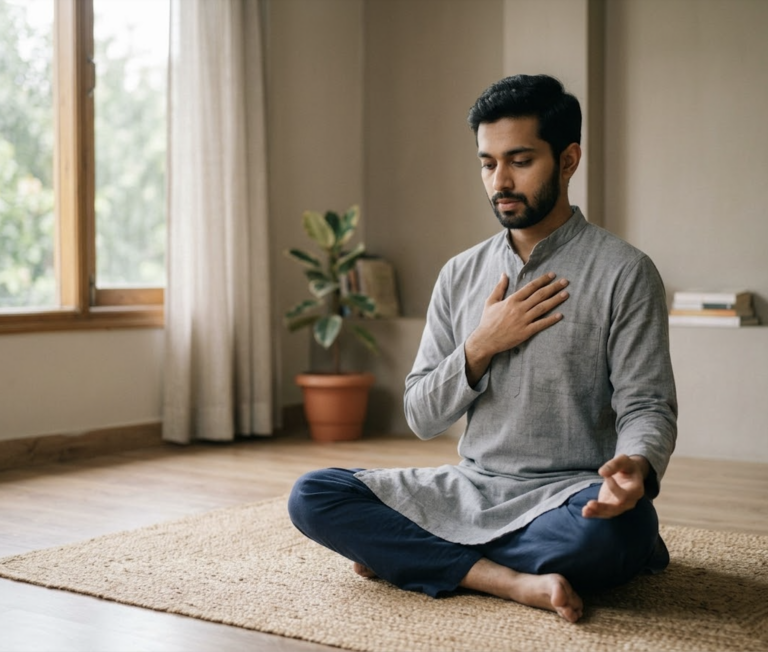
- Sit comfortably with spine erect
- Close your eyes and notice your natural breath
- Do not try to change it; just observe
Step 2: Try Box Breathing
- Inhale for 4 seconds
- Hold for 4 seconds
- Exhale for 4 seconds
- Hold for 4 seconds
- Repeat for 3 to 5 minutes
Step 3: Extended Exhale Breathing
- Inhale for 4 seconds
- Exhale for 6 to 8 seconds (longer exhale activates relaxation response)
- Repeat for 5 minutes
For the full 11 Minute Miracle technique, you can learn through The Breath Center’s offerings. The Breath Center syllabus outlines that Michael Brian Baker has taught his “Anatomy of Awakening” practitioner training course and certified hundreds of advanced facilitators.
The Breath Center also offers Breathwork 101: Fundamentals, a self-paced course with 15 guided breath techniques and over 30 hours of on demand training.
Important tips for beginners:
- Start with shorter sessions of 3 to 5 minutes and build up gradually
- Practice when you have 10 to 15 minutes of quiet time
- Sit or lie down comfortably
- If you feel dizzy or lightheaded, return to normal breathing immediately
- Do not force or strain the breath
Summary Table: Key Facts About the 11 Minute Miracle Breathwork
| Question | Answer |
|---|---|
| What is it? | A structured 11 minute conscious connected breathing practice derived from pranayama |
| Who created it? | Michael Brian Baker, founder of The Breath Center |
| How does it work? | Regulates the vagus nerve, activates parasympathetic nervous system |
| What are the benefits? | Reduced anxiety, better sleep, emotional release, spiritual experiences |
| Is there scientific evidence? | Yes, research in MDPI Healthcare, PLOS Mental Health, and Nature journals supports breathwork benefits |
| Is it safe? | Generally safe for healthy individuals; some should avoid or practice with guidance |
| How to start? | Begin with 3 to 5 minutes of simple breath awareness or Box Breathing |
Key Takeaways for Readers
- Breathwork is a scientifically validated tool for mental and physical health, with research published in PLOS ONE, MDPI Healthcare, and Nature journals.
- The 11 Minute Miracle was developed by Michael Brian Baker, who has taught his methods to hundreds of certified facilitators through The Breath Center.
- The practice works by regulating the vagus nerve, which a 2025 Frontiers in Psychology study identifies as a cornerstone for mental health and performance.
- Research published in MDPI Healthcare found that somatic psychoeducational interventions integrating breathwork were associated with increased oxytocin levels, improved autonomic function, and reduced psychological distress symptoms.
- A 2025 PLOS Mental Health study confirmed the efficacy of transformational breath for anxiety management.
- Beginners should start with 3 to 5 minute practices before attempting longer sessions, and always consult a healthcare provider before starting any new wellness practice.
FAQ’s on 11 Minute Breathwork Technique
What is the 11 Minute Miracle Breathwork technique?
The 11 Minute Miracle Breathwork is a structured practice derived from yogic pranayama and Kriya Yoga traditions, designed to produce rapid shifts in mental, emotional, and physical states through conscious connected breathing. It was developed by Michael Brian Baker, founder of The Breath Center, who has spent nearly 20 years at the intersection of modern science and universal wisdom traditions.
How does the 11 Minute Miracle Breathwork affect the body?
The practice works by consciously regulating breath patterns to activate the parasympathetic nervous system and stimulate the vagus nerve. Research published in Frontiers in Psychology confirms the vagus nerve serves as a cornerstone for mental health and performance optimization. The technique increases oxygenation throughout the body, regulates the vagus nerve, and helps release unresolved emotions stored in the body.
Is there scientific evidence for the benefits of this breathwork practice?
Yes. A 2025 study in MDPI Healthcare found breathwork was associated with increased oxytocin levels, improved autonomic function, and reduced psychological distress. A 2025 PLOS Mental Health study confirmed the efficacy of transformational breath for anxiety management. A 2023 Nature study identified a physiological mechanism for altered states of consciousness during circular breathwork.
How is the 11 Minute Miracle different from regular pranayama?
Traditional pranayama focuses on controlling the breath through specific counts and holds, while the 11 Minute Miracle emphasizes conscious connected breathing for accessing higher states of consciousness and facilitating deep emotional release. Traditional practices may require years to master, while this technique is designed for beginners.
Is the 11 Minute Miracle Breathwork safe for everyone?
While generally safe for healthy individuals, it is not recommended for pregnant women, people with epilepsy or seizure disorders, those with uncontrolled high blood pressure or recent heart attack, individuals with severe asthma or respiratory conditions, or people with a history of psychosis or bipolar disorder. Beginners should start with shorter sessions of 3 to 5 minutes and always consult a healthcare provider before starting any new wellness practice.
References
- Beauchamp, F. E., et al. (2025). Breathwork and holistic wellbeing: A protocol for a scoping review. PLOS ONE, 20(9), e0333360. https://journals.plos.org/plosone/article?id=10.1371/journal.pone.0333360
- Lopez Blanco, C., & Tyler, W. J. (2025). The vagus nerve: a cornerstone for mental health and performance optimization in recreation and elite sports. Frontiers in Psychology, 16, 1639866. https://www.frontiersin.org/journals/psychology/articles/10.3389/fpsyg.2025.1639866/full
- Hutson, P., & Hutson, J. (2025). Resonant breathwork as multimodal vagal–interoceptive modulation: An empirical synthesis. International Journal of Human Research and Social Science Studies, 2(11). https://digitalcommons.lindenwood.edu/faculty-research-papers/781/
- Dale, L. P., et al. (2025). Somatic psychoeducational intervention is associated with increased oxytocin levels, improved autonomic function, and reduced psychological distress symptoms. Healthcare, 13(24), 3236. https://www.mdpi.com/2227-9032/13/24/3236
- Gold, M. (2025). Decreased CO2 saturation during circular breathwork supports emergence of altered states of consciousness. Communications Psychology, 3, 47. https://www.nature.com/articles/s44271-025-00247-0
- Wheble, P. C. R., & Elcin, D. (2025). Efficacy of transformational breath for anxiety management in professional voice users. PLOS Mental Health, 2(6), e0000119. https://journals.plos.org/mentalhealth/article?id=10.1371/journal.pmen.0000119
- The Shift Network. (n.d.). Michael Brian Baker faculty profile. https://theshiftnetwork.com/shift_teacher/53940
- The Shift Network. (n.d.). Experience Breathwork Fundamentals for Opening to Higher Consciousness With Michael Brian Baker. https://theshiftnetwork.com/course/30MBaker01_23
- The Breath Center. (2022). Breathwork 101: Fundamentals Syllabus. https://s3.amazonaws.com/kajabi-storefronts-production/sites/2147500406/themes/2150093331/downloads/x9SxPSi3RxkI6Odo1CMU_SELF-PACED_22_BW101_Syllabus.pdf