Backstage Siblings Who Traded Stocks for Bhajans
Raghav Agarwal was an investment banker. His sister Prachi traded fixed income.
Backstage Siblings began the year they both stopped.
It started with about fifty people in a room. Friends and family, no stage, no tickets, somebody with a harmonium. Two years later they have played more than 250 shows across twenty cities, drawn crowds approaching ten thousand, and taken bhajans to Dubai and Singapore.
CNN now places them at the centre of India’s bhajan clubbing movement. A video of one of their sessions is widely credited with starting it.
This is how that happened, and what people say after they leave.
For the wider picture of where this sits, read our guide to the top spiritual practices trending in India in 2026, where bhajan clubbing ranks first.
Two Finance Careers, Abandoned
Raghav Agarwal worked as an investment banker. Prachi Agarwal was a fixed income trader. Both left corporate roles to pursue music full time.
The Kolkata siblings grew up attending satsangs with their father, where bhajans were part of childhood rather than performance.
Their understanding of music comes from those gatherings, where there was no separation between performer and listener.
Everyone sang together, without rehearsals or any expectation of perfection.
That is still the format.
What they were trying to build was not a career. While navigating demanding corporate jobs, they found themselves returning to music as a way to reconnect with something that felt real.
That personal need turned into a stated aim of creating honest, substance-free spaces where people could disconnect from the noise of everyday life.
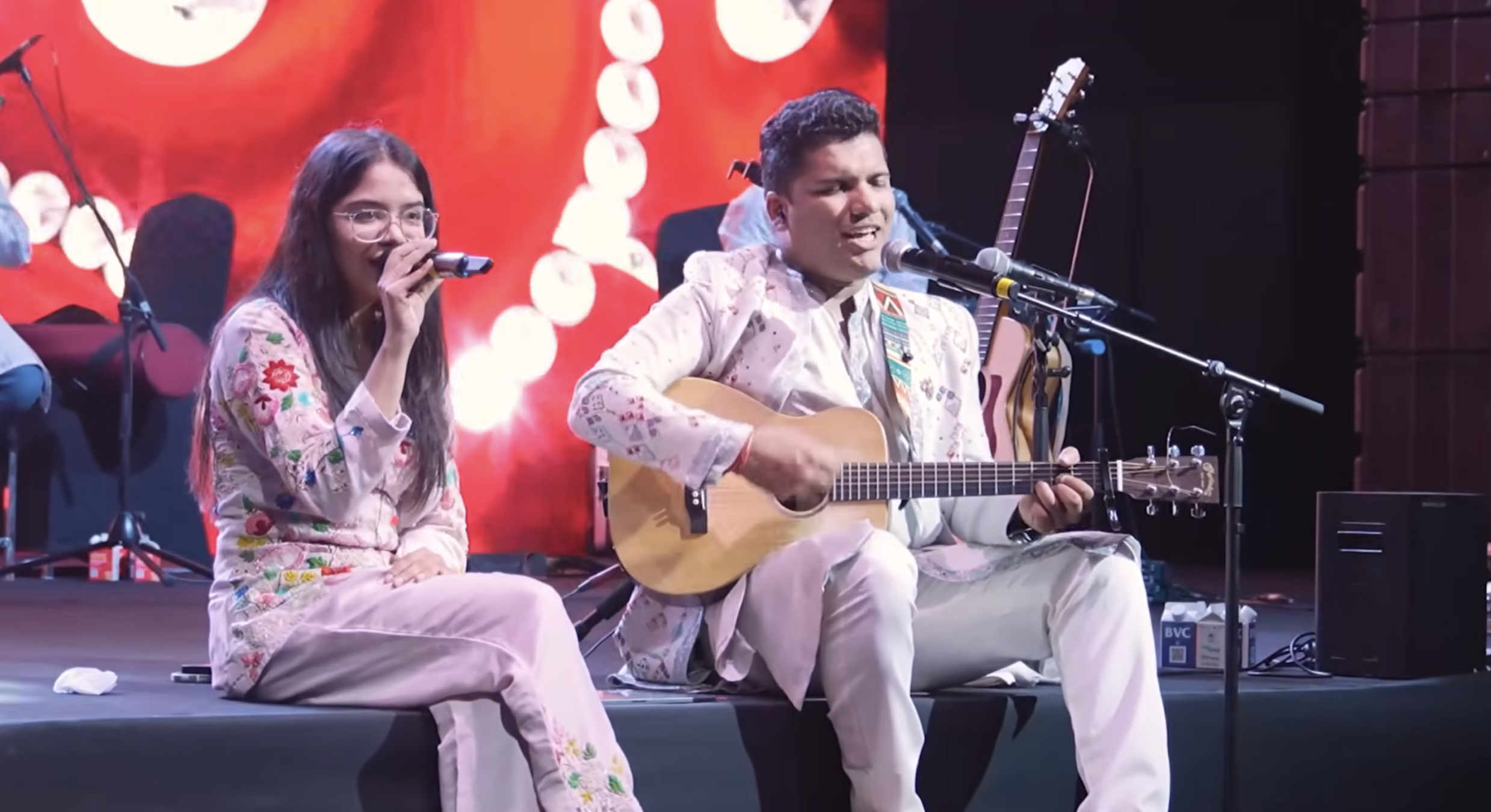
Their sessions blend bhajans, Bollywood, poetry and familiar melodies, shaped in the moment with no fixed setlist, on the principle that the audience itself is the main stage.
Not a Concert or a Performance
No stage, no setlist, no hierarchy between performer and audience. People sit on the floor and sing.
Their own description of the format is blunt. This is not a concert and not a performance. It is jamming, raw and straight from the heart, with no stage and no audience, everyone together as one big family.
Coverage of the scene calls it the anti-concert Gen Z did not know it needed. What makes it work is described as the opposite of a hyper-produced festival. No pressure to capture the moment.
No hierarchy between artist and audience. No expectation of perfection. People sit on the floor, sing together and build the atmosphere in real time. Spiritual but also social, structured but also fluid.
The video that started everything was not produced. It simply showed young people swaying, clapping and singing bhajans together.
That clip is credited with giving the whole trend its early momentum.
Their own framing of what happens is the clearest description anyone has offered. People arrive as strangers. They leave knowing the words to the same songs.
What People Say About Backstage Siblings Show
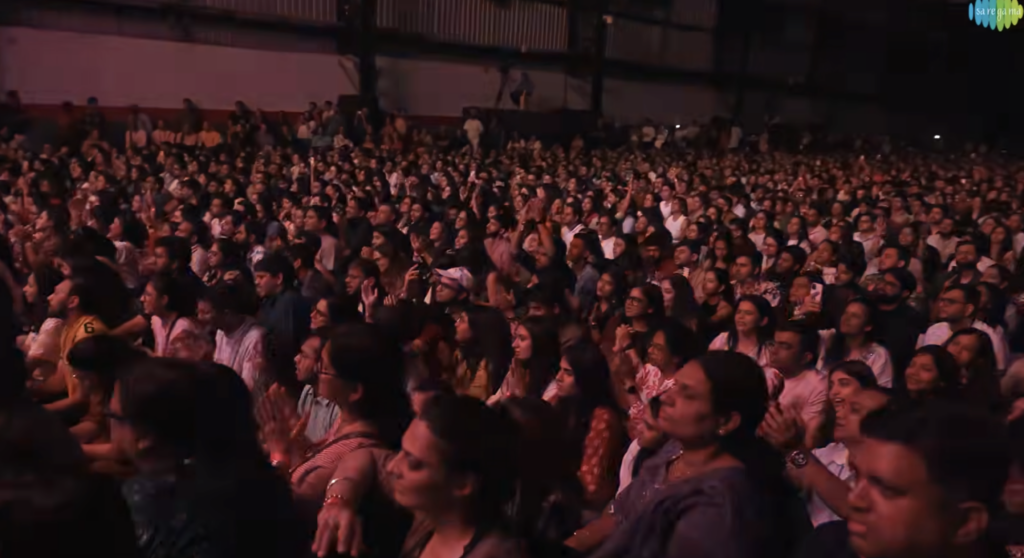
The recurring theme in attendee accounts is not the music. It is leaving calm, and the surprise of feeling something they had not expected to feel.
The most direct account comes from a viewer responding to their Jaipur show.
Writing under the name Sonam Narula on their YouTube channel in June 2026, in a comment that drew eighty upvotes, she said she loved the event at Jaipur, enjoyed it a lot, and that it somehow healed something in her.
It somehow healed something in me. That word somehow is doing a lot of work, and it recurs across these accounts. People struggle to name what happened.
Attendees at similar events describe it the same way.
Himanshu Gupta, a thirty-year-old IT professional and a regular at these nights, told AFP he felt energised and alive.
Aishwarya Gupta, a thirty-one-year-old nuclear physicist attending a Delhi concert with her face marked in both paint and religious marks, said it gave young people a chance to connect with devotion, and that it simply felt great to be there.
After a Backstage Siblings show in Mumbai, attendee Fiyoni Paradia said she would encourage others to come and see one.
What is absent from these accounts is as telling as what is in them. Nobody talks about the vocals. Nobody reviews the sound engineering. What people describe is how they felt walking out, and several of them describe being surprised by it.
From Fifty Friends to Ten Thousand
More than 250 performances across 20-plus cities, audiences approaching 10,000, and international shows in Dubai and Singapore, all within roughly two years.
The trajectory is unusually steep for something that started as a private jam.
Bloomberg reported that the siblings began with a session of around fifty friends and family before expanding into tours and ticketed shows.
Over the past two years they have completed more than 250 live performances across twenty-plus cities in India, drawn audiences of nearly ten thousand, and expanded internationally with shows in Dubai and Singapore.
They are now described as India’s biggest jamming duo.
A multi-city tour was launched in January.
And a whole circuit has grown around them. Sanatana Journey, founded by 25-year-old Nikunj Gupta, runs large-format events. Groups like Sumiran Satsang and Krishna Sansar have followed. Gupta says people feel relief at these gatherings, and that instead of feeling stressed or getting a hangover, they leave with a sense of calm.
One caution on the bigger claims. Reports that the duo have been recognised by the Prime Minister on Mann Ki Baat and have performed for the Ambani family appear in coverage but I could not confirm them in a primary source. Worth verifying before repeating.
Key Questions on Backstage Siblings
Who are Backstage Siblings?
Prachi and Raghav Agarwal, a Kolkata-based sibling duo who perform bhajans in a participatory jamming format. Both left finance careers to pursue music full time. Raghav worked as an investment banker and Prachi as a fixed income trader. They grew up attending satsangs with their father, which shaped the informal, no-setlist format they still use.
How did Backstage Siblings become famous?
A video of one of their bhajan jamming sessions, showing young people singing and clapping together, went viral and is widely credited with giving India’s bhajan clubbing trend its early momentum. They began with a session of around fifty friends and family before expanding into ticketed shows and tours.
How many shows have Backstage Siblings played?
More than 250 live performances across over twenty cities in India within roughly two years, drawing audiences approaching ten thousand people. They have also performed internationally in Dubai and Singapore.
What is a Backstage Siblings show like?
Familiar bhajans performed with guitars and drums, with the audience singing call-and-response throughout. There is often no fixed setlist and no formal separation between stage and crowd. No alcohol is served. The format comes from satsang gatherings where everyone sang together without rehearsal.
What is bhajan jamming?
An informal, participatory format where devotional songs are performed collectively rather than presented to an audience. It differs from a conventional concert in that listeners are expected to sing, and from a temple bhajan in that it uses contemporary instrumentation and concert-scale production.
Where can I see Backstage Siblings perform?
They tour multiple Indian cities including Mumbai, Bengaluru, Delhi and Kolkata, with dates announced through their own channels. They have also performed in Dubai and Singapore. Other organizers running similar events include Sanatana Journey, Sumiran Satsang and Krishna Sansar.
References
Storyboard18. Inside the rise of Backstage Siblings and India’s bhajan jamming boom
https://www.storyboard18.com/trending/inside-the-rise-of-backstage-siblings-and-indias-bhajan-jamming-boom-95790.htm
CNN. These Gen Zers are into a new kind of clubbing and it’s more prayer than party, July 2026
https://www.cnn.com/2026/07/04/india/india-gen-z-trend-spiritual-bhajan-clubbing-intl-hnk
The Print. Delhi just had its biggest bhajan clubbing event, glitter, tilak and Jai Shree Ram
https://theprint.in/feature/delhi-just-had-its-biggest-bhajan-clubbing-event-glitter-tilak-and-jai-shree-ram/2815503/
The National. Bhajan clubbing: devotional songs trip from temples to dance floors in India, March 2026
https://www.thenationalnews.com/lifestyle/2026/03/13/bhajan-clubbing-delhi-india-devotional-rave/
Social Media Dissect. How Backstage Siblings turned bhajans into one of India’s most powerful live music movements
https://www.socialmediadissect.com/how-backstage-siblings-turned-bhajans-into-one-of-indias-most-powerful-live-music-movements/