Neem Karoli Baba And His Famous Followers
The most interesting thing any of Neem Karoli Baba followers ever said came from a man who could not stand him.
Larry Brilliant had come to Kainchi looking for a sign. He had asked for a miracle, watched for a rainbow, got nothing, and decided to leave the next morning.
On his way out he stopped at the temple to say goodbye.
In his own words, although he did not like Maharaji, he thought he would just be very honest and have it out with him.
Brilliant went on to spend years working on smallpox eradication.
He is one of an unlikely group. A Harvard psychologist who had just been thrown out for LSD experiments. A young man from Long Island who ended up singing kirtan for a living.
An author who would later write one of the best-selling books on emotional intelligence. And a technology founder who arrived ten months too late.
They did not agree on much. What they left behind, in books and interviews and recorded conversations, is a fairly consistent picture of what actually happened in a small ashram in the Kumaon hills.
This is what they said, in their own words where we have them.
How Any of Them Got There?
One book. Richard Alpert, a Harvard psychologist expelled alongside Timothy Leary, met Neem Karoli Baba in India, took the name Ram Dass, and wrote Be Here Now in 1971.

Alpert was not a spiritual seeker by temperament. He was an academic with a wrecked career.
He and Timothy Leary had been running LSD experiments with students at Harvard and lost their positions over it. That was the state he was in when he went to India.
He came back with a different name.
Be Here Now was published in 1971. Square, brown, hand-lettered, full of drawings, unlike anything else on a shelf. It sold in the millions and is still in print.
It is the single reason most Western followers ever heard the name.
The Isha Foundation’s account of that period notes something worth pausing on. Maharaj ji sent Ram Dass back to the West rather than keeping him at the ashram.
He was sent home. And what he did at home brought everyone else.
Larry Brilliant, the One Who Didn’t Like Him?
Brilliant arrived skeptical, planned to leave, and describes his welcome as being asked whether he would write a book.
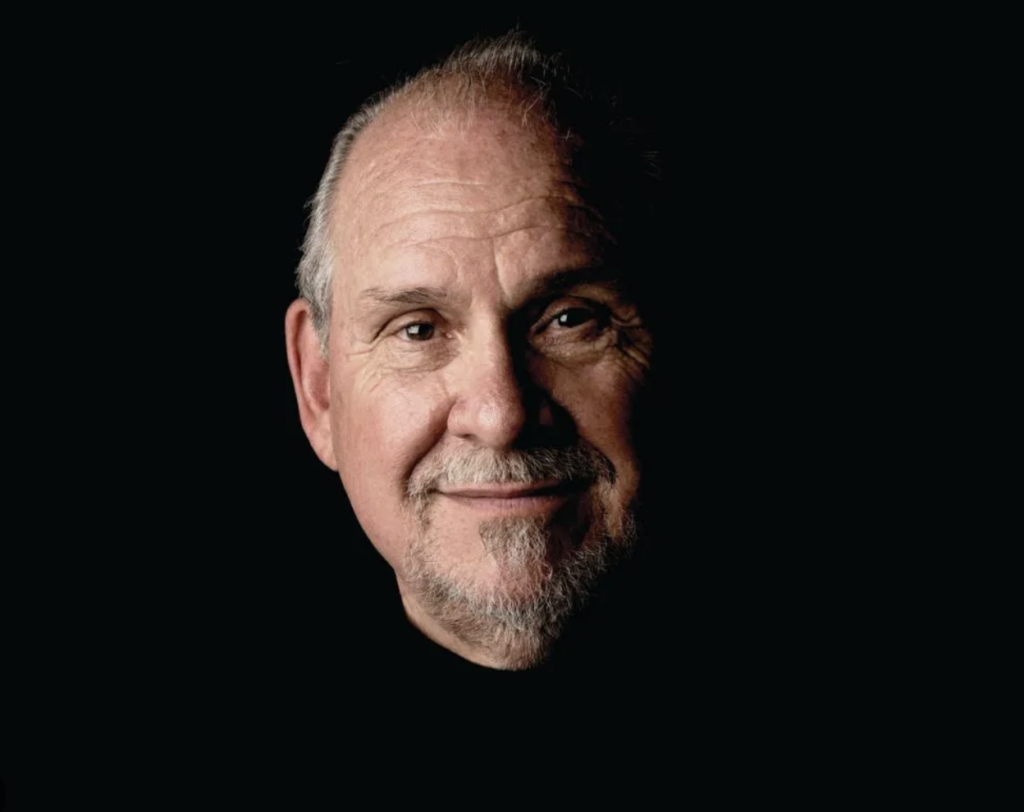
His account is the least devotional thing written about Neem Karoli Baba, and that is exactly why it lands.
He had been looking for a sign. He kept watching for a rainbow. Nothing came. He decided to go the next day.
That morning he took a taxi down to Kainchi to say goodbye. They arrived before anyone else was there and sat in front of the porch. Maharaji had not yet come out from inside the room.
What happens next, Brilliant tells plainly.
It became clear to him that Maharaji saw right through all the illusions, that he knew everything. And the first thing Maharaji said to him was to ask whether he would write a book.
Brilliant calls that his welcome. And says that after it, he just wanted to rub his feet.
A man arrives intending to pick a fight and leaves wanting to touch someone’s feet. No rainbow required.
Brilliant also left the best summary anyone has given of how Maharaj ji handled different people.
He said Maharaj ji sent Ram Dass on the path of dhyana, sent Daniel on jnana, sent him toward whatever the hell it is that he does, and chose bhakti as the route for Krishna Das.
Meditation for one. Knowledge for another. Devotional singing for a third.
And for Brilliant, something nobody had a name for, which turned out to be public health work at a scale that helped remove a disease from the earth.
He later co-founded the Seva Foundation with Ram Dass, an international health organisation based in Berkeley.
Krishna Das, the One Who Sings
Krishna Das describes the feeling rather than the teaching, and his stories are unusually funny.
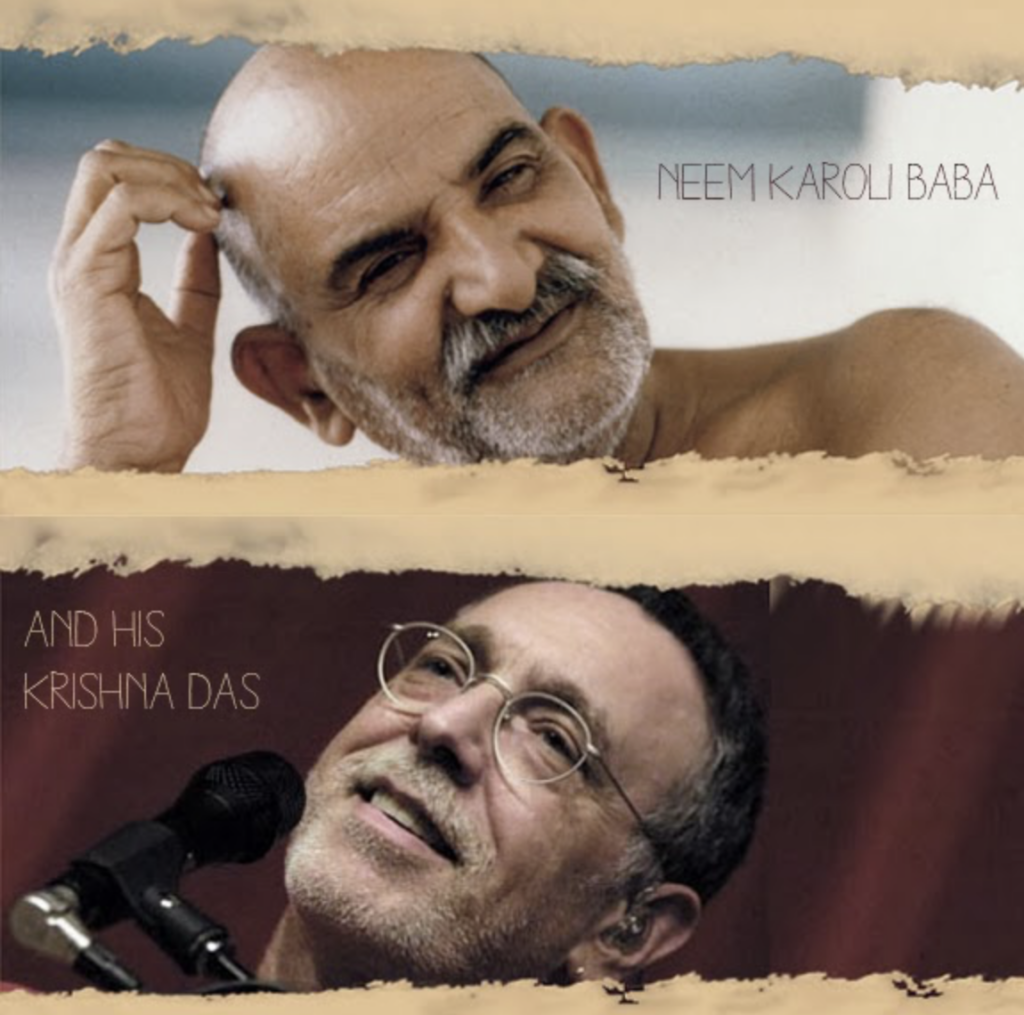
He went to India young, came back a kirtan musician, and has spent his life singing the same handful of names.
What he says about Maharaj ji is simple and does not try to be profound. Just as the sun shines equally on everyone, Maharaj ji loved them all equally despite their flaws. And he never felt the way he did in his presence.
The stories he tells are better than the summaries.
In one, he confesses something he has been carrying around, expecting a reckoning. Maharaj ji says fine, very good, now you will be enlightened, bops him on the head, and goes back to sleep.
That is the register of most of these accounts. Not thunderbolts. A man half asleep on a wooden bench, hitting someone on the head and dozing off.
The Others Nobody Mentions
The circle included Daniel Goleman, Bhagavan Das, Jai Uttal, Dada Mukerjee and Surya Das. Julia Roberts has said a photograph of him drew her toward Hinduism.
The names people know are Jobs and Zuckerberg. The names that actually matter are these.
Daniel Goleman went on to write Emotional Intelligence, which reframed how a generation of managers thought about people.
Bhagavan Das was the American who first took Richard Alpert to meet Maharaj ji. Without him there is no Be Here Now and none of the rest of it.
Jai Uttal became a musician. Dada Mukerjee was an Indian professor who wrote about him from the inside. Surya Dasbecame a Buddhist teacher.
Wikipedia’s list of disciples runs to Bhagavan Das, Dada Mukerjee, Jai Uttal, Krishna Das, Larry Brilliant, Ram Dass and Surya Das.
Julia Roberts has said that a photograph of him was part of what drew her toward Hinduism. She never met him. He had been dead for decades.
And the pattern in that list is worth noticing. An epidemiologist, a psychologist, two musicians, an academic, a Buddhist teacher.
He did not produce a school of imitators. Everyone went off and did something different.
Steve Jobs, the One Who Arrived Too Late
Jobs read Be Here Now, flew to India in 1974 to find Neem Karoli Baba, and arrived ten months after his death. They never met.
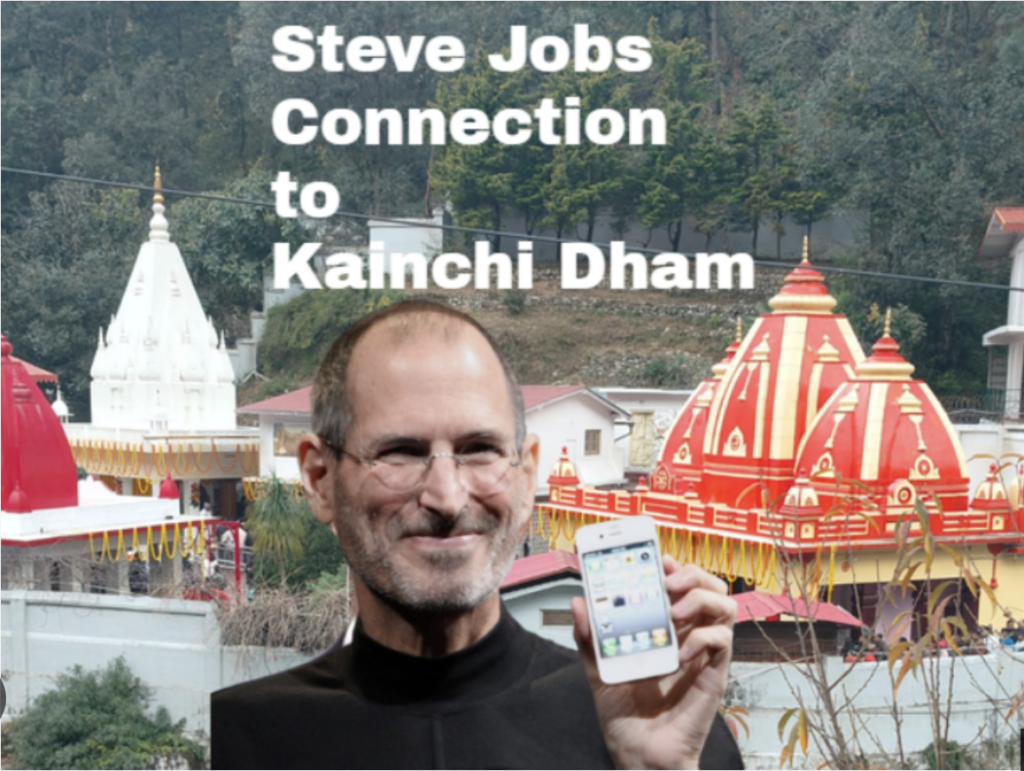
This is the part most people have heard, and it is wrong in a specific way.
Jobs read Alpert’s book and, according to his biography, called it profound, saying it transformed him and many of his friends.
He set out for India in 1974 with his friend Daniel Kottke, who later became Apple’s first employee after the founders.
Neem Karoli Baba had died in Vrindavan on 11 September 1973.
Jobs stayed anyway. Months of travelling, ashrams, a shaved head, clothes falling apart. It shaped him. But it is not accurate to say Maharaj-ji advised him, because they never spoke a word to each other.
Mark Zuckerberg went later, and said less than people think.
At a Delhi town hall in 2015 he described Jobs telling him to visit a temple in India to reconnect with what he believed the mission of the company was.
One account that carefully separates the documented from the retold notes that Zuckerberg said “this temple” and never named it.
Kainchi Dham is almost certainly right. It is still an inference that hardened into a fact. Circulating accounts also give the visit as 2008, 2012 and 2015 depending on the source.
And the apple story is a myth. A version circulating widely claims apples were Maharaj ji’s favourite fruit and that is why the company is named Apple.
Jobs explained the name himself. He was on a fruitarian diet, had just come back from an apple farm, and thought the word sounded friendly.
The contrast is the point of this article. Larry Brilliant, who actually knew him, said his welcome was being asked whether he would write a book. Not whether he would build anything.
What They All Say Neem Karoli Baba Taught
Love everyone, feed everyone, remember God.
Every account converges on the same three things.
Parvati Markus, herself part of the satsang, wrote the community’s history. His primary instruction, she reports, was simply to love everyone, feed everyone, and remember God.
No stages. No levels. No initiation, no fee, no certification.
The feeding was not a metaphor. People arrived at Kainchi and food appeared whether they had asked or not. Markus adds one dry note, that most of the Western satsang did not get into feeding everyone while they were actually in India.
Some managed it later. Brilliant and Ram Dass built a health organisation. Goleman changed how people talk about emotion at work.
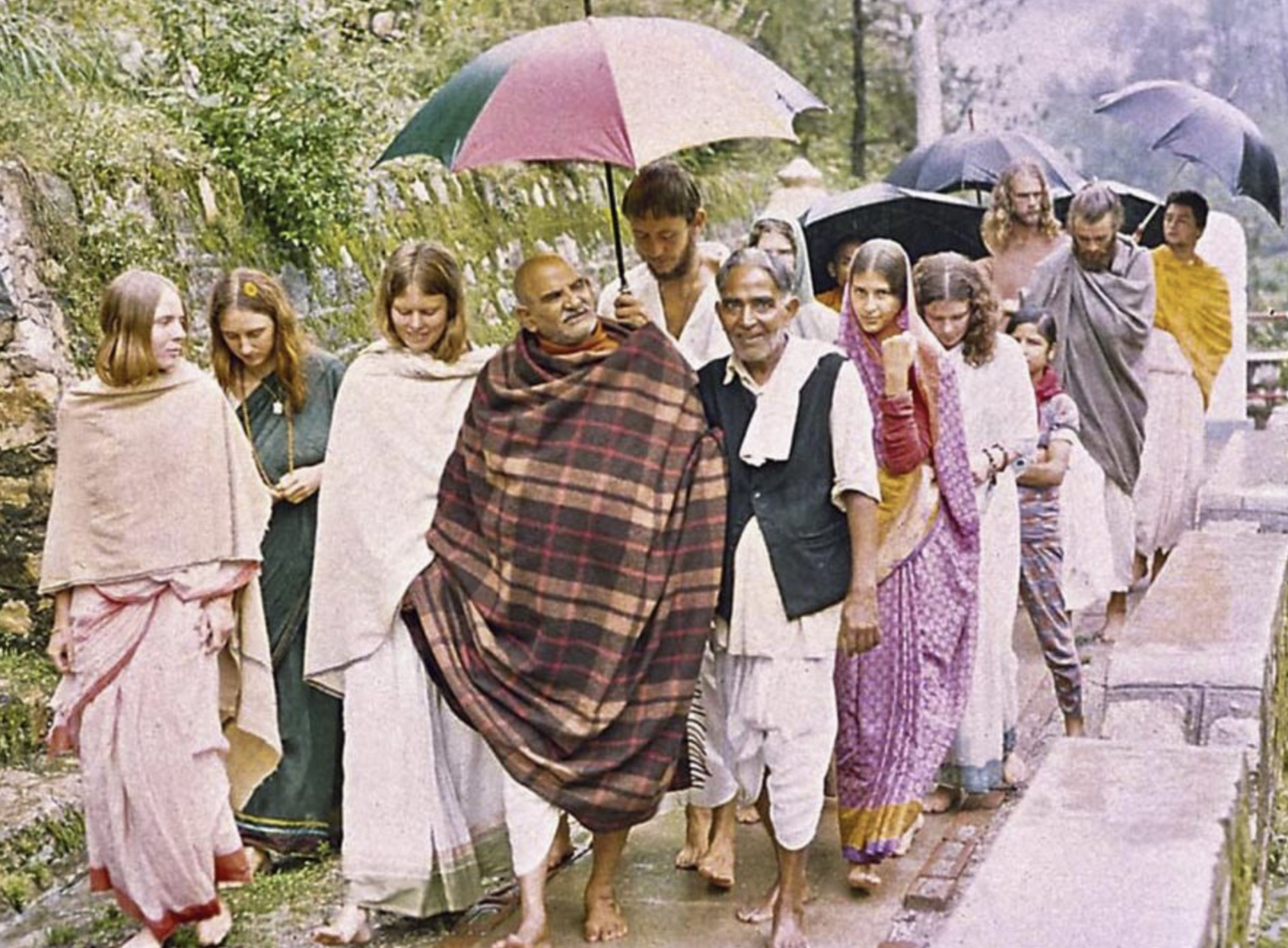
The stories that survive are small. Someone made to accept an umbrella he did not want before a trip to Kashmir, told it rains heavily there. It did.
One devotee spent days trying to work out what Maharaj-ji was muttering. It turned out to be an old Behari dialect meaning, roughly, too big, too big, too little, too little. ‘
Asked why, he said it was because people live in a world of judgment, where things are always too big or too little.
That is the level most of the teaching operates at. Not doctrine. Observations, delivered sideways.
The Film That Brought This Back
Hanuman Ansh released in India on 7 August 2026 and goes to worldwide theatrical release on 11 September, the fifty-third anniversary of his death.
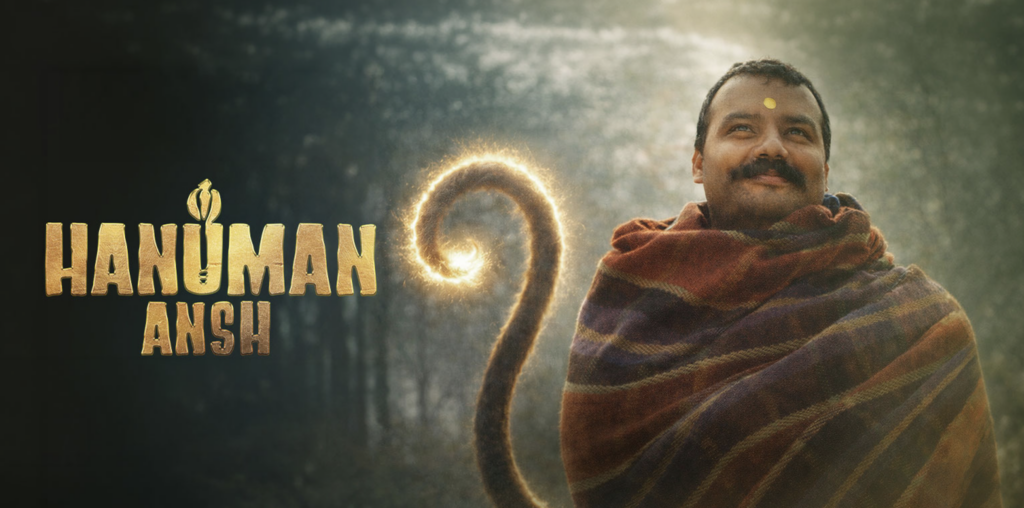
Two films about him came out this year, which is unusual for a man who died in 1973 and never gave an interview.
Hanuman Ansh was written and directed by Vishal Chaturvedi, produced by Swambhu Media Network, made on a budget of around two crore. It runs 150 minutes in Hindi with subtitles in Braj and Bundeli, and its theatrical poster was unveiled at Kainchi Dham itself.
Opening day took about ten lakh.
By week three it had earned ten crore forty lakh, and Hombale Films announced a worldwide release for 11 September 2026, handled through Hombale Overseas with Phars Film distributing.
A hundredfold, on people telling each other about it.
Which is precisely how his following spread the first time. He never advertised. People came back from Kainchi unable to stop talking, and other people got on planes.
Shree Baba Neeb Karori Maharaj, a separate Hindi biographical drama with Subodh Bhave in the role, released on 29 May 2026.
And the release date. Neem Karoli Baba died on 11 September 1973. The worldwide release is 11 September 2026. Fifty-three years to the day.
Kainchi Dham Today
A small ashram on the Kosi river in Nainital district, Uttarakhand, founded in 1964. A large mela is held every 15 June.
The name means scissors, from the way the road bends around the hills.
It is not grand. A temple complex beside a river, forested slopes behind, a few hours from Nainital town. In the late sixties and seventies it filled up with young Americans in filthy clothes who had come halfway round the world on the strength of a paperback.
Every 15 June, marking the foundation day, thousands come for the Kainchi Dham Mela.
If you go, go on an ordinary day. The mela is thousands of people and the crowd becomes the experience. The rest of the year it is quiet.
There is no entrance fee. No shop selling a graded course. No lineage holder to be initiated by. A temple, a river, people, and food.
And go for what they went for. Brilliant arrived wanting an argument. Alpert arrived with his career in ruins. Krishna Das arrived young and confused.
None of them came because of a logo.
For related reading, see our guide to Hindu meditation techniques at and our piece on what happens at a 10 day Vipassana retreat.
Key Takeaways for Readers
What did Krishna Das say about Neem Karoli Baba?
That just as the sun shines equally on everyone, Maharaj-ji loved them all equally despite their flaws, and that he never felt the way he did in his presence.
What did Larry Brilliant say about Neem Karoli Baba?
Unusually candidly, that he did not like him. Brilliant had been waiting for a sign, saw none, and decided to leave. He stopped at the temple intending to be honest and have it out with Maharaji. He then describes realising that Maharaji saw through all the illusions and knew everything, and says the first thing Maharaji asked was whether he would write a book. Brilliant calls that his welcome and says afterwards he simply wanted to rub his feet.
What did Mark Zuckerberg say about Kainchi Dham?
At a Delhi town hall in 2015 he said Jobs had advised him to visit a temple in India to reconnect with the mission of his company, and that the trip helped. He referred to “this temple” and never named it. Kainchi Dham is the widely accepted identification but remains an inference. Accounts also give the visit variously as 2008, 2012 and 2015.
What is the film Hanuman Ansh about?
A Hindi devotional drama on the life of Neem Karoli Baba, written and directed by Vishal Chaturvedi on a budget of around two crore. It released in India on 7 August 2026, took about ten lakh on opening day, and reached ten crore forty lakh by week three on word of mouth. Worldwide theatrical release is 11 September 2026, the fifty-third anniversary of his death.
Who are Neem Karoli Baba’s famous followers?
Ram Dass, formerly the Harvard psychologist Richard Alpert. Larry Brilliant, the epidemiologist who worked on smallpox eradication. Daniel Goleman, author of Emotional Intelligence. The musicians Krishna Das, Jai Uttal and Bhagavan Das. The academic Dada Mukerjee and the Buddhist teacher Surya Das. Julia Roberts has said a photograph of him drew her toward Hinduism.
How did Western followers first hear about Neem Karoli Baba?
Through one book. Richard Alpert, a Harvard psychologist expelled alongside Timothy Leary over LSD research, met Neem Karoli Baba in India, took the name Ram Dass, and wrote Be Here Now in 1971. It sold in the millions and remains in print.
References Used in this Article
Neem Karoli Baba. Wikipedia, including the list of disciples, the Seva Foundation and the Kainchi Dham mela
https://en.wikipedia.org/wiki/Neem_Karoli_Baba
Neem Karoli Baba quotes and stories, including Larry Brilliant’s account from Miracle of Love
https://realizedone.com/neem-karoli-baba/
The Miracle of Love, including Larry Brilliant and Krishna Das quotes
https://medium.com/@mysticzippy/the-miracle-of-love-89f611baea3b
Neem Karoli Baba Stories: Baba Knows Best. Ram Dass, including Krishna Das accounts
https://www.ramdass.org/baba-stories-maharaji-knows-best/
Markus P. Love Everyone, publisher description including the primary instruction
https://www.walmart.com/ip/4904067
Why Neem Karoli Baba Sent Ram Dass to the West. Isha Foundation
https://isha.sadhguru.org/en/blog/article/why-neem-karoli-baba-sent-ram-dass-to-the-west
Isaacson W. Steve Jobs, quoted passage on Be Here Now
https://www.goodreads.com/notes/52054094-steve-jobs/27519771-rohit-gupta/0143e8ec-16c9-403c-8853-08812618614a
What’s Common Between Steve Jobs, Mark Zuckerberg and India. ED Times
https://edtimes.in/whats-common-between-steve-jobs-mark-zuckerberg-and-india/
Neem Karoli Baba: Steve Jobs, Zuckerberg and Julia Roberts Connection, separating documented statements from retellings
https://divinestore.sanatanajourney.com/blogs/updates/neem-karoli-baba-why-steve-jobs-mark-zuckerberg-julia-roberts-were-all-devotees
How Neem Karoli Baba Inspired Steve Jobs and Other Tech Giants. Daaju Pahadi, cited for the conflicting dates
https://daajupahadi.com/how-neem-karoli-baba-inspired-steve-jobs-mark-zuckerberg-and-other-tech-giants/
Hanuman Ansh worldwide release date. India.com
https://www.india.com/entertainment/bollywood/hanuman-ansh-worldwide-release-date-september-11-2026-neem-karoli-baba-story-to-reach-global-audiences-8515812/
Hanuman Ansh film details, cast, budget and production. 4to40
https://www.4to40.com/movie-reviews/hanuman-ansh/
The Man and Myth Behind Hanuman Ansh. NewsGram
https://www.newsgram.com/religion/2026/09/02/hanuman-ansh-movie-story-of-neem-karoli-baba
Neem Karoli Baba Steve Jobs. TikTok, cited as an example of the Apple logo claim in circulation
https://www.tiktok.com/discover/neem-karoli-baba-steve-jobs