Sadhguru And The Kailash Mansarovar Yatra Tragedy 2026
At 9.05 on the morning of 26 August 2026, a group leader named Ishanga Praveen sent a message saying his party had arrived at the immigration point at Gyirong.
At 9.14 the water came.
Nine minutes. The building was washed away along with much of the town, and eighty people travelling with Isha Foundation were gone.
In the weeks since, Isha has cited that arrival time as evidence of the group’s discipline. Critics have pointed out that arriving early made no difference whatsoever.
In Nepal, the families of twelve tour guides who died alongside the pilgrims say the foundation has not counted their husbands at all.
The Kailash Mansarovar Yatra tragedy 2026 is now two stories. What happened on the mountain, and what has happened since.
How the Sadhguru Kailash Tragedy 2026 Unfolded at Gyirong
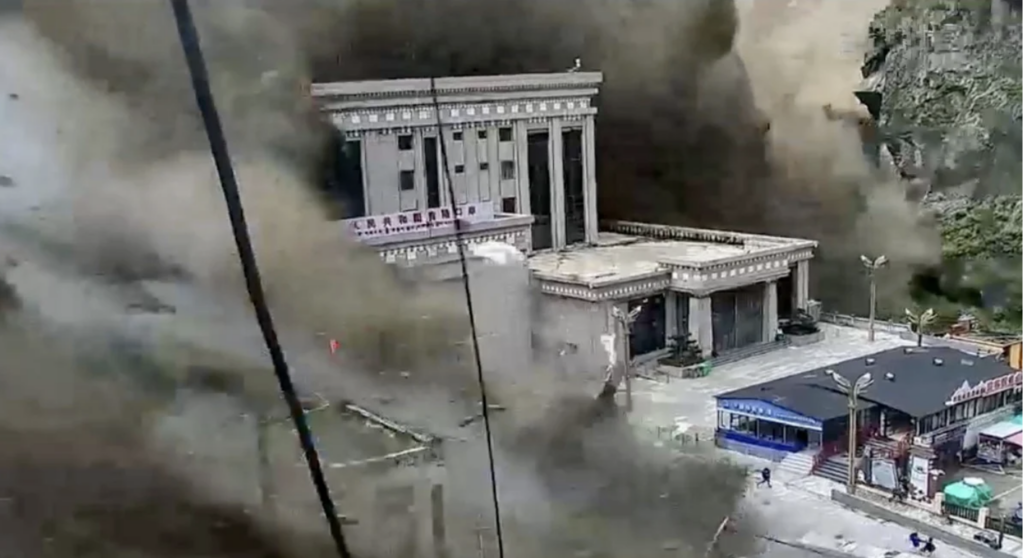
A flash flood struck Gyirong Township on the Tibet side of the Nepal border on the morning of 26 August 2026, destroying the immigration building where an Isha Foundation group had just arrived.
The water came down the Bhote Koshi basin and crossed into Nepal’s Rasuwa district, cutting the Rasuwagadhi to Kerung corridor, the main overland route between the two countries.
Isha Foundation’s account of the timing is precise. Group leader Ishanga Praveen sent a message at 9.05am confirming the party had reached the immigration point.
Contact was then lost with Praveen and the entire group, who appeared to have been inside the building when the flood struck. The building was washed away along with a substantial part of the town.
Isha’s position on warning is unambiguous. There had been none. The weather was clear. No sirens, no alerts, no travel advisories were issued before the incident.
Telecommunications in the area went down and roads were blocked, preventing the organisation from reaching the site.
The scale of what Isha had on that route. Twenty-one groups were part of the pilgrimage. At the time of reporting, 495 people had returned safely, 743 were still in Tibet and 148 in Nepal. Participants came from nineteen countries.
Nearly fourteen hundred people, from one organisation, in one season.
Sadhguru wanted to travel to Gyirong himself. Maa Gambhiri, a coordinator, told PTI that he sought to visit the site to help but did not receive the necessary approval.
Key Takeaways for Readers Here
Below are the answers to all the queries and doubts associated with Isha Foundation, Sadhguru and Kailash Mansarovar Yatra Floods.
What happened in the Kailash Mansarovar Yatra tragedy 2026?
On the morning of 26 August 2026 a flash flood struck Gyirong Township on the Tibet side of the Nepal border. An Isha Foundation group had arrived at the immigration building at 9.05am. The flood hit at 9.14, destroying the building and much of the town. Eighty pilgrims and twelve Nepali tour guides died. The wider disaster in Nepal killed more than 950 people.
What did Sadhguru say about the Kailash flood?
He said the group’s discipline had ensured they reached the immigration centre by 9.05am, minutes before the flood struck at 9.14. Isha Foundation stated there had been no warnings, that the weather was clear, and that no sirens, alerts or travel advisories had been issued. He also sought approval to travel to Gyirong himself but according to a coordinator did not receive it.
Why is Sadhguru facing criticism over the Kailash tragedy?
Three lines of criticism. That he had spoken of the protective power of his guidance before the pilgrimage, and that arriving nine minutes early prevented nothing. That families of twelve Nepali tour guides say the foundation counted only its eighty clients and left the guides out entirely. And that he was absent from the ground, though Isha says he sought and was denied permission to travel to the site.
What happened to the Nepali guides in the Kailash flood?
Twelve Nepali tour guides died alongside the pilgrims. Their families say they felt ignored, alleging the foundation named only its eighty clients and refused to name the guides, several of whom had worked on the yatra for over a decade. Ngima Chhemji Sherpa, whose husband Gumbu Sherpa died, said the most agonising part was that the foundation had not considered him part of the Kailash tour at all.
How has Isha Foundation responded to the criticism?
Isha Africa Foundation rejected claims of abandonment, saying its team remains in Kathmandu helping families work with authorities and assisting with embassy procedures, luggage retrieval and documentation, and that Sadhguru has stayed closely engaged. The foundation approached the Indian and Chinese embassies, with the US embassy also assisting.
Was anyone at fault for the Kailash flood?
No allegation of negligence in causing the disaster has been established. Isha Foundation stated there were no sirens, alerts or advisories, and the weather was clear. The criticism the foundation faces concerns its conduct afterwards rather than the flood itself.
Debate on The Early Arrival of Group
Sadhguru cited the group’s early arrival as evidence of their discipline. Critics say arriving nine minutes before a flash flood is not a form of protection.
This is where the criticism began.
Sadhguru had spoken of the protective power of his guidance during the pilgrimage. After the disaster he said the group’s discipline had ensured they reached the immigration centre by 9.05am, minutes before the flood struck at 9.14.
Critics argue that arriving early did not prevent the tragedy, and that it raises doubts about the claims of spiritual protection made beforehand.
Two named voices in that coverage as per Deccan Chronicle:
Vedic researcher Janaki P questioned whether travellers should now view every journey through the lens of mortality.
Rajesh K, described as a frequent solo traveller, dismissed the claim that discipline had saved lives, saying the flood was simply too powerful and too sudden for any of it to have mattered.
The fairest reading of both positions.
Sadhguru’s statement is factually accurate. The group did arrive at 9.05 and the message exists. Whether that timing means anything is a different question, and the answer appears to be no. They were in the building because they arrived on schedule.
There is no version of that morning where being punctual helped.
The Twelve Guides Not Counted by Isha
Twelve Nepali tour guides died alongside the pilgrims. Their families say Isha Foundation named only its eighty clients and left the guides out of the count entirely.
This is the part of the story that has received almost no coverage in India, and it is the sharpest criticism the foundation faces.
Families of the guides said they felt ignored by the Isha Foundation, for which they had worked for over a decade to make the Kailash Mansarovar Yatra a success. Their allegation is specific.
The foundation mentioned only its eighty clients missing in the floods as part of the tour, even refusing to name the twelve Nepali tour guides who were also part of the yatra.
At least ninety-two people associated with Isha Foundation were missing across the Dudhkoshi and Trishuli corridors.
The families speak for themselves (sources: The Himalayantimes, News by Nenow):
Ngima Chhemji Sherpa, from Sotang village in Solukhumbu District, lost her husband Gumbu Sherpa. She said she had lost her husband in the disaster, but that the most agonising part of the aftermath was that Sadhguru’s Isha Foundation had not even considered Gumbu part of the Kailash tour.
She is a mother of two.
Gumbu’s brother Pasang put it more directly. The Isha Foundation earned millions of rupees every year running the Kailash tour with support from Nepali guides like his brother. They had heard Sadhguru always talked about human survival and wellbeing. Where, he asked, is his humanity in this case.
Padam Kumari, wife of Suresh Shrestha, who was swept away near Timure, said not a single word of sympathy had been delivered to them from the Isha Foundation. She is a lactating mother with a fourteen-month-old daughter.
Mina Simkhada, wife of Kapil Simkhada, said they all wanted support in a time of crisis, because their husbands had lost their lives serving the Isha yatra.
We are quoting these women at length because nobody else has. The Indian coverage counted eighty. The Nepali coverage counted ninety-two.
What Isha Foundation Says in Response?
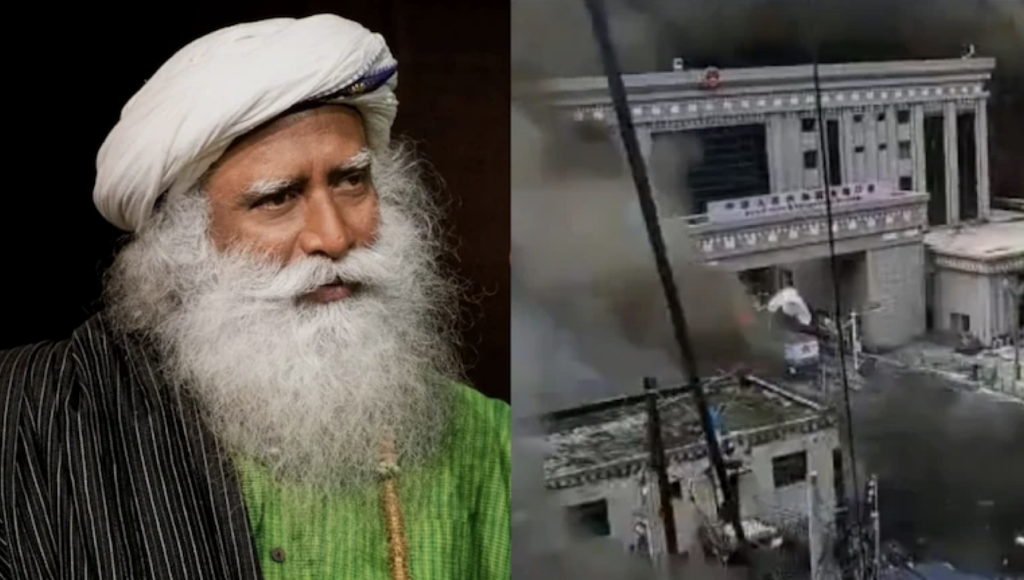
The foundation rejects claims it abandoned families, says a team remains in Kathmandu assisting with authorities and embassy procedures, and states Sadhguru has stayed closely engaged.
The response deserves to be heard in full, and it is not nothing.
Isha Africa Foundation rejected claims that Sadhguru and the organisation had abandoned the families of the missing group. It said its team continues to be in Kathmandu, helping families work as closely as possible with authorities on the ground, and assisting with embassy procedures, luggage retrieval and documentation.
It stated that Sadhguru has stayed closely engaged.
Isha has approached both the Indian and Chinese embassies, and the US embassy has been assisting efforts to obtain permission for Sadhguru and volunteers to reach the site.
The criticism it has not answered is about presence. Scores of people have criticised the organisation and its founder for his absence on the ground.
Against that, the coordinator’s statement to PTI is relevant. He sought approval to travel to Gyirong and did not receive it. That is a Chinese border authority decision, not an Isha one.
One story from that response illustrates the whole difficulty. A South African woman named Govender had gone on the pilgrimage to celebrate her thirty-third birthday. A video of her joy at being blessed by Sadhguru on the occasion had been posted on the organisation’s Facebook page days before the disaster. Now, the video is deleted from everywhere. Yet an another video of the Govender’s parents is surfacing online.
Her mother, speaking afterwards, said she was not looking for a fight or attention, and made no apology for expressing how she felt. Because when your child is missing, she said, you do not have the luxury of remaining silent and comfortable. You fight. You question. You push. You search. You demand answers.
She also said she had taken a step back and asked herself where her energy should go now.
Debate Over The Cost of Isha’s Kailash Programmes
The tragedy has renewed debate over the price of Isha’s Kailash programmes, with reports of premium packages costing up to ₹50 lakh.
This was a live argument before the flood and the disaster amplified it.
Reports of premium packages costing up to fifty lakh rupees have circulated, and supporters counter that the foundation also runs lower-cost and free initiatives.
Wikipedia records that the trip cost up to five million rupees, around fifty-two thousand US dollars, per person in 2021, with cheaper options available in which devotees receive limited interaction with Sadhguru.
The fair version of both arguments.
The foundation runs genuinely large free programmes, including rural healthcare reaching millions and schools operating on scholarship. That is documented and it is not marketing.
And a pilgrimage where access to the founder scales with price is a commercial product, whatever else it also is.
Both things are true simultaneously. The tragedy did not create this tension, it exposed it to a wider audience.
45 years. Two disasters. Both in August.
On 18 August 1998, a landslide destroyed the village of Malpa in Pithoragarh district, killing 221 people including 60 pilgrims on that year’s twelfth Kailash Mansarovar Yatra batch.
The comparison was reached for immediately in India, and it holds up.
Malpa was a hamlet of seven huts on the old Indian route, a night stopover for pilgrims. Above it rose an almost vertical rock face.
According to Wikipedia, the rockfall began on 16 August, killing three mules. Then around a million cubic metres of rock and debris came down in the night and erased the village. The fall continued until 21 August.
Two hundred and twenty-one people died. Sixty were pilgrims. Also killed were Kumaon Mandal Vikas Nigam staff running the camp, villagers, small traders, ITBP and police personnel, and Nepalese labourers.
The dancer Protima Bedi was among the dead.
Only two men from the camp area survived, Amar Singh and Kalyan Singh, pony owners from Pangla village, because they happened to be staying near the PWD guest house rather than in the village. (Source : thenortherngazette )
And the line that frames all of this. The Indian Council of World Affairs records that since 1981, the yatra has proceeded smoothly except for the landslides of 1998.
Forty-five years. Two disasters. Both in the same fortnight of August.
Nepalese labourers died at Malpa too. They are mentioned in the record and named nowhere.
What Happens Now?
The Rasuwagadhi to Kerung crossing was destroyed, affecting the principal Nepal overland route. Wikipedia now records the eighty as killed rather than missing.
The status of the missing has shifted in official accounts. Wikipedia’s entry on Isha Foundation now states that in 2026, eighty pilgrims were killed by the Nepal-Tibet floods while waiting at the border crossing.
The wider death toll in Nepal had reached 788 by 31 August and later figures placed it above 950.
The route is the practical problem. With bridges and road destroyed at Rasuwagadhi, the corridor cannot carry pilgrim traffic in its current state. Anyone holding a 2026 or 2027 booking on the Nepal overland route should confirm directly with operators and check Ministry of External Affairs advisories.
The unresolved question is the count. Whether the twelve Nepali guides are included in official figures, in compensation, and in the foundation’s own accounting, is something their families are still asking.
What The Sadhguru Kailash Tragedy 2026 Is Actually About?
Nothing anyone did on that mountain determined who lived.
That is the difficult part and it applies in every direction.
The criticisms of Isha Foundation are legitimate and they are about the aftermath, not the flood. Whether spiritual protection was implied beforehand. Whether twelve guides were counted. Whether a family in Solukhumbu received a phone call.
Those are answerable questions and they deserve answers.
But nobody caused this. There were no sirens because there was nothing to sound them about. The weather was clear.
Suggested reading: Sadhguru Controversy 2026 Verified Facts
References
Deccan Chronicle. Kailash tragedy puts Sadhguru’s safety claims under fire
(https://www.deccanchronicle.com/southern-states/telangana/kailash-tragedy-puts-sadhgurus-safety-claims-under-fire-1984417)
The Himalayan Times. Families of missing Kailash Yatris seek answers from Sadhguru’s Isha Foundation
(https://thehimalayantimes.com/nepal/families-missing-kailash-yatris-want-answers-from-sadhgurus-isha-foundation)
North East Now. Nepal floods: Families of missing Kailash Yatris seek answers from Sadhguru’s Isha Foundation
(https://nenow.in/top-news/nepal-floods-families-of-missing-kailash-yatris-seek-answers-from-sadhgurus-isha-foundation.html)
The South First. No sirens, no alerts: Isha says pilgrims had seconds to escape before flash flood
(https://thesouthfirst.com/tamilnadu/no-sirens-no-alerts-isha-foundation-says-pilgrims-had-seconds-before-flash-flood-hit-nepal/)
TimesLIVE. We didn’t abandon missing Nepal pilgrims or families, says spiritual organisation
(https://timeslive.co.za/news/south-africa/2026-09-15-we-didnt-abandon-missing-nepal-pilgrims-or-families-says-spiritual-organisation)
The Federal. Nepal floods: 77 Isha Foundation pilgrims remain untraceable
(https://thefederal.com/category/news/nepal-floods-77-isha-foundation-pilgrims-remain-untraceable-255052)
ETV Bharat. Miracle and mystery follow deadly Nepal flash floods
(https://www.etvbharat.com/en/bharat/miracle-and-mystery-follow-deadly-nepal-flash-floods-enn26083004439)
ANI. Kailash Mansarovar pilgrim recounts Nepal floods experience after successful yatra
(https://aninews.in/news/national/general-news/kailash-mansarovar-pilgrim-recounts-nepal-floods-experience-after-successful-yatra20260831084719/)
Wikipedia. Isha Foundation, including cost and 2026 fatalities
(https://en.wikipedia.org/wiki/Isha_Foundation)
Wikipedia. 1998 Malpa landslide
(https://en.wikipedia.org/wiki/1998_Malpa_landslide)
The Northern Gazette. Dharali disaster reminds of Malpa landslide tragedy of 1998
(https://thenortherngazette.com/index.php/2025/08/12/dharali-disaster-reminds-of-malpa-landslide-tragedy-of-1998/)
Indian Council of World Affairs. Kailash Mansarovar Yatra: Recent Developments
(https://www.icwa.in/show_content.php?lang=1&level=3&ls_id=12875&lid=7874)