
Why I Can’t Meditate? Common Problems
If you’ve ever asked yourself, “why I can’t meditate?” the answer isn’t that you’re bad at it. You’re just trying to do the wrong thing.
Almost everyone struggles in the beginning – not because meditation is difficult, but because they’re trying to do something it was never meant to be.
Meditation is not about stopping your thoughts. It’s not about forcing calmness either. It’s simply about noticing what’s happening within you, without reacting to it.
Once that clicks, meditation stops feeling like a struggle… and starts feeling natural.
Why do I feel guilty when I try to meditate?
You feel guilty because your mind thinks you’re wasting time.
We’ve been conditioned to always stay busy. So when you sit still, it feels unproductive – almost wrong. But that’s just conditioning.
Sri Sri Ravi Shankar explains:
“When the mind slows down, what is already within you becomes visible.”
That stillness you’re avoiding is not empty. It’s where clarity begins. Start small. Even five minutes is enough. Over time, the resistance fades because your mind realizes nothing is being lost.
Why I Can’t Meditate Without My Mind Wandering?
Because your mind is doing its job. Thinking is natural. Expecting it to stop is what creates frustration.
Sadhguru puts it clearly:
“Meditation is not about stopping thoughts. It is about creating distance from them.”
Instead of fighting your thoughts, just notice them. At first, it may feel messy. That’s normal.
Research published in Science shows that mind-wandering is a natural state of the brain and happens frequently. So nothing is wrong with you.
The practice is simply to return — again and again.
Why is it so hard to find time to meditate?
It’s not really about time. It’s about the priority.
We always find time for what feels important. Meditation doesn’t feel urgent in the beginning — so it gets pushed aside.
Sadhguru says:
“If you don’t have 10 minutes for yourself, you are too busy for your own well-being.”
You don’t need an hour. Start with five minutes. Attach it to something you already do like right after taking shower or waking up. Once it becomes part of your routine, it stops feeling like extra effort.
What if I’m not a calm person?
Then meditation is exactly for you. A lot of people believe they need to be calm before they meditate. But that’s not how it works.
Sri Sri Ravi Shankar explains:
“You don’t meditate because you are peaceful. You meditate to become peaceful.”
Restlessness is not a problem. It’s just your starting point. Even if your mind feels chaotic, simply sitting is enough.
What if meditation makes me feel uncomfortable emotions?
This surprises many beginners. You sit quietly… and suddenly emotions come up — anxiety, sadness, restlessness.
It can feel uncomfortable. But nothing new is being created. It was already there.
Premanand Maharaj explains:
“When you sit in silence, whatever is inside you comes forward. This is not a problem — this is truth.”
Meditation reveals what you’ve been avoiding. And that’s actually where healing begins. Instead of pushing emotions away, just stay with them.
Over time, they lose their intensity.
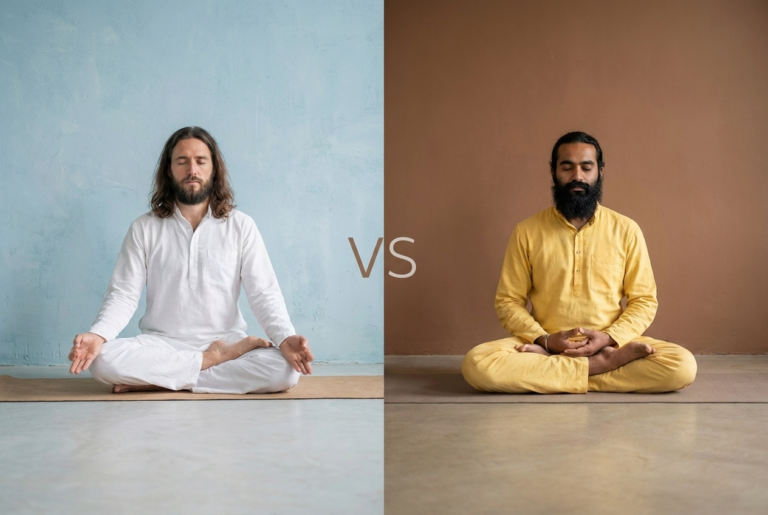
Do I need to sit in lotus position?
No. You don’t need to sit in a perfect pose to meditate. That idea mostly comes from images, not reality.
Sadhguru explains:
“Your body should be at ease, and your spine reasonably straight. That is enough.”
You can sit on a chair. You can sit on a cushion. The goal is simple – be comfortable enough to stay still.
What if I’m doing it wrong?
Almost everyone worries about this. You sit, your mind wanders, and you think it’s not working. But if you are aware of your thoughts, you are already meditating.
Sri Sri Ravi Shankar says:
“Meditation is not concentration. It is deep rest with awareness.”
There is no perfect session. There is no right or wrong experience. Just showing up is enough.
A small shift that changes everything
Most beginners try to control the mind. But meditation is about understanding it. Instead of asking:
“Why can’t I stop thinking?”
Ask:
“Can I just observe what’s happening?”
That shift makes everything easier.
What actually helps (from real practice)
At some point, everyone struggles with a restless mind.
The author, a meditation practitioner, shares:
“I struggled with a wandering mind for months. What helped was not fighting it — just labeling each thought as ‘thinking’ and letting it go.”
It sounds basic. But it works.
Summary: Quick solutions for common meditation problems
| Problem | What’s really happening | What helps |
|---|---|---|
| Guilt | Stillness feels unproductive | Start small |
| Wandering mind | Natural thinking process | Observe, don’t fight |
| No time | Low priority | Begin with 5 minutes |
| Not calm | Wrong expectation | Just sit anyway |
| Emotions | Suppressed feelings surfacing | Allow them |
| Posture confusion | Social myth | Sit comfortably |
| Doing it wrong | Overthinking | Awareness is enough |
If you’re just starting, do this
Keep it simple. Sit comfortably. Close your eyes. Watch your breath. That’s it.
If your mind wanders, gently come back. And when it wanders again, come back again. That repetition is the practice.
If you want a deeper understanding of breath and its role, explore: What is Pranayama?
Want to build consistency?
Start with a structured approach: learn How to Start Daily Meditation
Conclusion
You’re not bad at meditation. You’ve just been expecting the wrong things. Meditation is not about becoming thoughtless. It’s about becoming aware. And that awareness begins the moment you stop trying to control everything.
Sadhguru says:
“Meditation is not something you do. It is something you allow.”
Once that sinks in, the struggle starts to fade.



5 Comments