Guru Purnima Story: Shiva’s Journey to Becoming Adiyogi
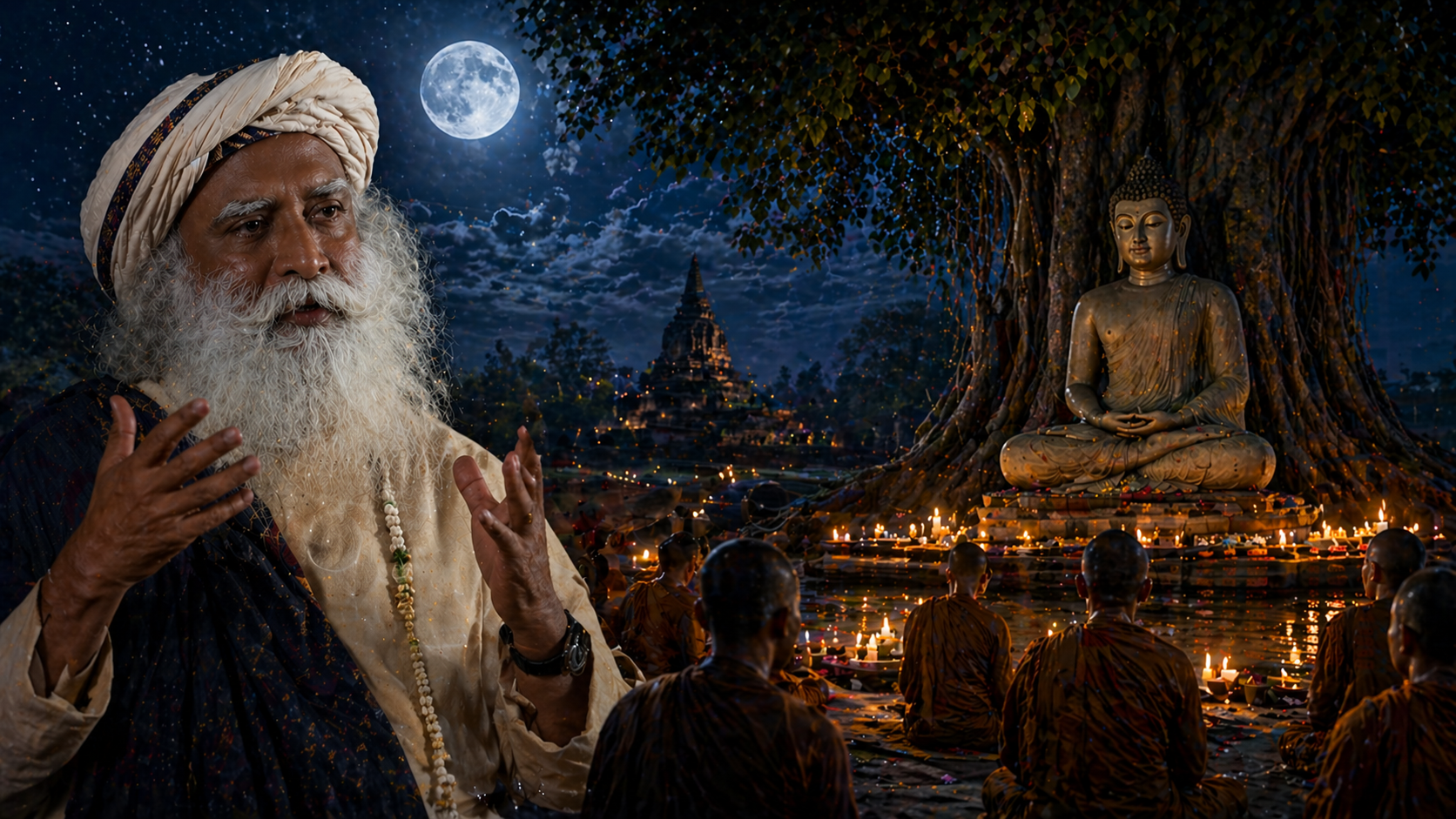
The Guru Purnima story begins over 15,000 years ago, in the upper reaches of the Himalayas, where a being appeared with no name and no history and ended up becoming the first guru humanity ever had.
On July 29, 2026, the full moon rose over India. Millions honored their teachers, offered gratitude, and sat in meditation. But few knew the deeper story behind this day.
Guru Purnima is not just a festival. It is the day the first guru was born the day Adiyogi transformed himself into Adi Guru.
This is the Guru Purnima story in full: how the first yogi became the first guru, why it happened on a full moon, and what it still means for anyone searching for guidance today.
Updated July 20, 2026: With Guru Purnima now 9 days away on July 29, 2026, interest in the Adiyogi story has surged across India. According to Google Trends data for the week of July 14-20 2026, searches for “Guru Purnima story” have risen sharply across Maharashtra, Uttar Pradesh, and Karnataka. The Isha Foundation’s Sadhguru Arpanam seven-day sadhana, which begins on July 22, is now open for registration at isha.sadhguru.org, giving seekers a structured preparation for the full moon on July 29.
Who is Adiyogi and Why is He Called the First Guru?
IIn the yogic culture, Shiva is not seen as a god but as Adiyogi, the first yogi. When he transformed himself into a teacher on Guru Purnima, he became Adi Guru, the first guru.
The word Adiyogi means “the first yogi.” He is the originator of yoga, not as physical postures, but as a science of self-transformation.
According to the Isha Foundation, a being appeared in the Himalayas over 15,000 years ago. No one knew his name or where he came from. He is simply referred to as Adiyogi, the first yogi.
This being was Lord Shiva himself. He was not just the destroyer of the Hindu Trinity. He was the source of pure consciousness, the guru who held a vast ocean of knowledge about the self, the universe, and the forces that bind them.
In the yogic tradition, Shiva is seen as the Dakshinamurthy, the one who faces south, the direction of learning and wisdom.
Britannica notes that legend describes Shiva living and meditating as a yogi in the Himalayas. Many seekers came to the mountains hoping to gain wisdom from him, but most could not understand his ways.
Adiyogi is also known as the Jagadguru, teacher of the world. He imparts teachings through the silent power of presence, which is said to be the essence of Jnana Yoga.
The Guru Purnima Story: How Adiyogi Became Adi Guru
Adiyogi gave his seven disciples preparatory steps and ignored them for 84 years. When the sun shifted from the northern run to the southern run (Dakshinayana), he looked at them and saw they were ready. On the next full moon, he transformed into Adi Guru. That full moon is Guru Purnima.
The Guru Purnima story unfolds in three parts.
Part 1: The Seven Seekers
Over 15,000 years ago, a yogi appeared in the Himalayas. People saw that he was experiencing something they could not fathom. They came, waited, and left. Only seven people hung on.

These seven were insistent. “We want to know what you know,” they said. Adiyogi dismissed them: “You fools, the way you are, you are not going to know in a million years. You need to prepare. This is not entertainment.”
Because they were so insistent, he gave them a few preparatory steps. They started preparing, day after day, week after week, year after year.
Part 2: The 84-Year Wait
According to Sadhguru, the seven did 84 years of sadhana. They meditated. They prepared. They became, in his words, shining receptacles of knowing.

Then, when the sun was shifting from the northern run to the southern run, a period this tradition calls Dakshinayana, Adiyogi looked at these seven people. He could not ignore them anymore.
Part 3: The Transmission
He observed them closely for 28 days, and when the next full moon rose, he decided to become a guru. That full moon day is known as Guru Purnima.

He turned south, which is why he is known as Dakshinamurthi, the one who faces south, and the transmission of the yogic sciences to the seven disciples began.
This transmission is said to have happened at the banks of Lake Kantisarovar, a few kilometers beyond Kedarnath.
The first full moon of Dakshinayana is Guru Purnima, the day the first guru was born.
What Did Adiyogi Teach the Saptarishis?
Adiyogi did not teach rituals or religion. He revealed the science of yoga: the mechanics of life, the secrets of energy, consciousness, and breath, and how to take a human being to its ultimate possibility.
When this tradition says “yoga,” it does not mean twisting your body or holding your breath. It means the mechanics of life itself, and how to take this piece of creation, meaning you, toward its fullest possibility.
The teachings included:
- The science of yoga as a path of self-transformation
- The secrets of energy, consciousness, and breath
- The balance between Shakti (feminine energy) and Shiva
- Living in alignment with dharma and nature
Each of the Saptarishis received a unique aspect of this knowledge to preserve and share with the world. These teachings laid the foundation of ancient Indian spirituality, later expanded through the Vedas, Upanishads, and yogic scriptures.
According to the Isha Foundation, Adiyogi expounded 112 methods of attainment. Because that was too much for any one disciple to carry, he divided it into 16 methods each and sent each sage to a different part of the world.
Why Does the Guru Purnima Story Happen After Dakshinayana?
Guru Purnima is the first full moon after the summer solstice, when the sun shifts from the northern run (Uttarayana) to the southern run (Dakshinayana). This shift marks a time of receptivity, which is why the transmission happened now.
This is the time of year when Adiyogi’s attention fell upon the Saptarishis. They had spent 84 years preparing. Then, as the solstice shifted from summer to winter, Adiyogi looked at them and saw they were ready.
Sadhguru explains that this solstice shift affects the human system directly. The sun’s run through the northern hemisphere, roughly January to June, is considered the masculine phase, a time of fulfillment. Dakshinayana, the southern run, is the feminine phase of the earth, a six-month window of receptivity.
Shiva is said to have chosen this season because it is when beings are naturally more open. He spent the following moon cycle observing his seven disciples, then began teaching on the coming full moon in July, known as Guru Pournima.
Indian culture was long attuned to this solstice shift. Most festivals tied to feminine energy begin from this date onward. It is considered the moon phase of the earth, a season of intimacy.
Who Were the Saptarishis, and What Happened After the Transmission?
The seven disciples became the Saptarishis (seven sages). After receiving the knowledge, they went out completely empty and spread the yogic sciences across the world, creating an unbroken lineage that continues today.
The seven sages were Agastya, Vashishtha, Jamadagni, Gautama, Bharadvaja, Atri, and Vishvamitra.
After the transmission, Adiyogi told them to go and share it with the rest of the world. He directed them as to which one should go to which part of the world.
When they were just getting ready to leave, he said, “After all this, won’t you offer anything to me?” They were so completely mesmerized by what he had offered, they had forgotten this fundamental etiquette. They looked at themselves, “What do we have that we can give?”
Agastya Muni bowed down to Adiyogi and said, “I offer everything back to you.” Taking this cue, everyone else did the same. Everything they had learnt and known, they poured back at his feet. After many years of learning and grasping, they were once again completely empty.
Shiva said, “It is time to go.” Before they went, they asked, “Can we at least have you whenever we want?” He said, “Yes, if you stay empty as you are right now, I am always there for you.”
These seven sages went out empty and impacted the world in a way that can never be obliterated. Adiyogi manifested himself in a million different ways because they had the sense to give back everything that they had learnt.
The constant cycle of yogis moving from the Himalayan region south and back again during the seasons was maintained for thousands of years. During the summer, they were in Himalayan caves. During the winter, they came south.
Everything that modern yoga institutions do today is a small extension of the work that Agastya Muni began.
How is the Guru Purnima Story Told in Buddhist and Jain Traditions?
In Buddhist tradition, Guru Purnima marks the day Gautama Buddha delivered his first sermon at Deer Park in Sarnath, setting the Wheel of Dharma in motion. In Jain tradition, it marks the day Lord Mahavira accepted his first disciple, Indrabhuti Gautam.
According to Britannica, Guru Purnima is one of the rare observances shared across Hindu, Buddhist, and Jain traditions, each honoring the principle of the teacher through their own ceremonies on the same full moon. Buddhist monks begin Vassa on this day – the three-month annual monastic retreat during which practitioners intensify inner work.
In Hindu tradition, the day is also known as Vyasa Purnima, honoring Maharishi Veda Vyasa, the sage who classified the four Vedas into Rigveda, Samaveda, Yajurveda, and Atharvaveda, authored the Mahabharata containing the Bhagavad Gita, and wrote 18 Puranas. Prokerala confirms that disciples traditionally perform Guru Puja, recite the Guru Stotra, and offer dakshina on this day across all three traditions.
What unites all three observances is the same recognition: that knowledge cannot transmit itself. Every tradition that has produced wisdom in the world has done so through a chain of teachers and students. Guru Purnima is the day that chain is consciously honored.
For five verified reasons why Guru Purnima is observed across all three traditions, read our dedicated guide.
Why Does the Guru Purnima Story Matter Today?
This story predates all religion. Before people devised divisive ways of fracturing humanity, Adiyogi explored every possible way to transform the human mechanism into its ultimate possibility.
Charles Darwin talked of biological evolution 200 years ago. Adiyogi talked of spiritual evolution 15,000 years ago. His teaching was that every atom in existence has its own consciousness, but what they do not have is a discerning mind. Once consciousness arises with a discerning mind, it is the most powerful possibility. This is what makes human life unique.
Guru Purnima celebrates the most precious idea that has entered the human mind: that a person can evolve beyond their present limitations and go into a completely different dimension of experience, existence, and access into the existence.
This is the most significant day for the human race. It was held that way in this land until recently. Guru Purnima was one of the most important festivals in the nation. People celebrated it irrespective of caste or creed because in this country, the most important thing was not wealth or money. Knowledge or knowing was considered the highest value.
For young Indians in 2026 navigating career anxiety, digital overload, and the collapse of traditional certainties, the Guru Purnima story carries new weight. It is a reminder that the guru is not just a person — it is the practice itself, the willingness to evolve beyond your present limitations, and the courage to turn inward.
If you are ready to meditate on Guru Purnima, read our complete guide to Guru Purnima 2026 meditation.
Guru Purnima Story: FAQs
What is the Guru Purnima story in short?
Over 15,000 years ago, Shiva appeared in the Himalayas as Adiyogi, the first yogi. Seven seekers, later known as the Saptarishis, stayed with him through 84 years of preparation. On the full moon after Dakshinayana, he turned south and transmitted the science of yoga to them, becoming Adi Guru the first guru. That full moon is Guru Purnima.
Who is the first guru in the Guru Purnima story?
Shiva, worshipped as Adiyogi, is considered the first guru. He is also called Adi Guru and Dakshinamurthy, “the one who faces south.”
Why is Guru Purnima celebrated on a full moon?
Guru Purnima falls on the first full moon after Dakshinayana, the period the yogic tradition considers most receptive to spiritual transmission — which is why Adiyogi chose this moment to become a guru.
Who were the seven disciples in the Guru Purnima story?
They are known as the Saptarishis: Agastya, Vashishtha, Jamadagni, Gautama, Bharadvaja, Atri, and Vishvamitra.
Summary Table: The Guru Purnima Story at a Glance
| Question | Answer |
|---|---|
| Who is Adiyogi? | Shiva, the first yogi who appeared in the Himalayas over 15,000 years ago |
| When did Adiyogi become Adi Guru? | On Guru Purnima, the first full moon after Dakshinayana |
| How long did the disciples wait? | 84 years of sadhana and preparation |
| Where did the transmission happen? | At Lake Kantisarovar, near Kedarnath |
| Who were the seven disciples? | The Saptarishis, including Agastya Muni |
| What did Adiyogi teach? | The science of yoga — the mechanics of life, energy, consciousness, and breath |
| Why is Guru Purnima celebrated? | To honor the day the first yogi became the first guru |
Key Takeaways for Readers
- The Guru Purnima story marks the day the first guru was born — over 15,000 years ago.
- Adiyogi is Shiva, the first yogi. On Guru Purnima, he transformed into Adi Guru, the first teacher.
- The Saptarishis waited 84 years before Adiyogi accepted them as disciples. Their dedication set the standard for the guru-shishya parampara.
- Adiyogi’s teaching was not religion — it was a science of self-transformation, energy, and consciousness.
- The guru-shishya tradition began with this story and continues unbroken to this day.
- You do not need a physical guru to honor Guru Purnima. A quiet space, a clear intention, and 20 minutes of stillness on July 29 is enough.

You can also read our dedicated guide on five verified reasons why Guru Purnima is celebrated across Hindu, Buddhist, and Jain traditions.
References
- Isha Foundation. (2020, July 2). Why Do We Celebrate Guru Purnima? https://isha.sadhguru.org/us/en/wisdom/article/why-celebrate-guru-purnima-sadhguru-answers
- Isha Foundation. (2018, July 25). The Story of Guru Purnima: From 15000 Years Ago till Today. https://isha.sadhguru.org/global/en/wisdom/article/story-guru-purnima-from-adiyogi-today
- Isha Foundation. (2010, June 30). Anaadhi: The Shift of the Solstice. https://isha.sadhguru.org/en/wisdom/sadhguru-spot/anaadhi-the-shift-of-the-equinox
- Isha Foundation. (2017, July 7). Sadhguru on Gurus: Adiyogi and the Origin of Guru Pooja. https://isha.sadhguru.org/en/wisdom/article/sadhguru-gurus-adiyogi-origin-guru-pooja
- News18. (2025, July 9). Who Is ‘Ultimate Guru’? https://www.news18.com/viral/gk-guru-purnima-who-is-ultimate-guru-yoga-music-dharm-kama-moksh-expert-religion-9432021.html
- ABP Live. (2025, July 9). This Guru Purnima 2025, Know Why Lord Shiv Is Worshipped As The First Guru. https://news.abplive.com/religion/guru-purnima-lord-shiva-adiyogi-saptarishi-story-hindu-mythology-1786670
- ABP Live. (2021, July 17). Guru Purnima 2021: Know Importance & Significance Of This Day In Different Religions. https://news.abplive.com/lifestyle/guru-purnima-2021-know-importance-significance-of-this-day-in-different-religions-1470344
- Britannica. (2026, June 24). Guru Purnima. https://www.britannica.com/topic/Guru-Purnima