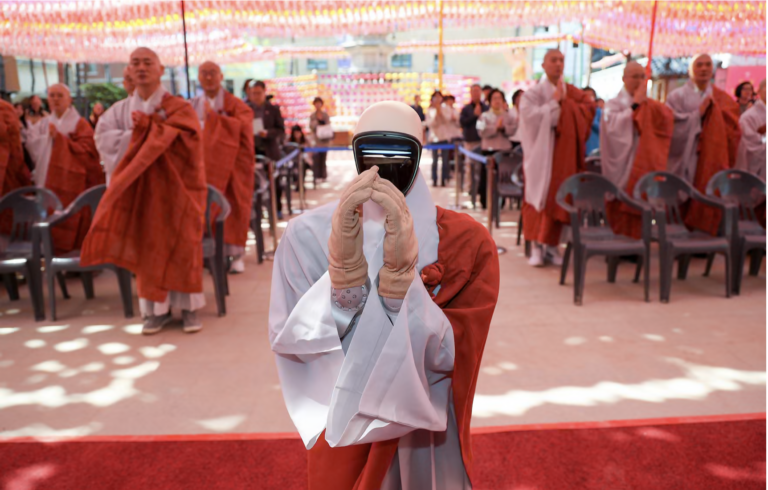
Mahabharat AI And Spirituality
Mahabharat AI has seen a 400 percent surge in search volume according to Kantar’s India in Search 2026 report. The same report shows Gita GPT searches rose 83 percent. These numbers are not anomalies. They represent a fundamental shift in how young India engages with ancient scriptures.
Across the country, millions of seekers are turning to AI powered tools to explore religious texts, ask questions, and receive personalized interpretations of scriptures like the Mahabharata and Bhagavad Gita.
At The Inner Path, we have analyzed this trend to understand what it means for the future of faith in India. This is not a rejection of tradition. It is a repackaging of tradition, making scripture accessible, interactive, and available on demand.
Here is everything you need to know about Mahabharat AI and the rise of digital spirituality in India.
What Is Mahabharat AI and Why Are Indians Searching for It
Mahabharata AI is an artificial intelligence powered tool that allows users to ask questions, seek clarifications, and explore philosophical concepts from the Mahabharata in an interactive, conversational format.
Unlike traditional methods of scripture study which require access to a guru, attending lengthy discourses, or reading dense translations, Mahabharat AI offers on demand access. A young professional in Bengaluru can explore the Mahabharata during a commute. A student in a small town can ask philosophical questions without waiting for a teacher.
According to search data analyzed by Kantar’s India in Search 2026 report covered by The Economic Times, Indians are actively renegotiating how they believe and belong. Spirituality has become one of the biggest search areas, with consumers increasingly seeking flexible, personalized, and tech enabled ways to engage with faith.
Soumya Mohanty, Managing Director at Kantar South Asia, notes that search behaviour continues to be one of the most honest signals of how India thinks, feels, aspires and adapts. The surge in searches for Mahabharata AI reflects a broader hunger for accessible, interactive spiritual content.
How Much Have Searches for Mahabharat AI Grown in India
Searches for Mahabharata AI jumped 400 percent year on year, from 400 to 2,000 average monthly searches, as reported by Indian Television Dot Com.
This remarkable growth is part of a larger trend. According to Social Samosa, overall AI searches in India have grown to 235 million average monthly searches, up 154 percent year on year. Indians are not just adopting AI for work or entertainment. They are bringing it into their spiritual lives.
Soumya Mohanty told The Economic Times that the Indian consumer is very mature when it comes to AI, with India being quite ahead in terms of that. This proficiency is now extending into the spiritual domain, where technology is enhancing accessibility and personalization.
The data from Kantar’s report, covered by ET BrandEquity, suggests that religious content is becoming more interactive, searchable, and tailored to individual needs. This marks a broader transition in how religion is practised in India, moving from collective and institution led practices to more individualized, on demand, and digitally mediated experiences.
How Does Mahabharat AI Work
Mahabharata AI uses natural language processing to understand user questions and generate responses based on the epic’s text, philosophical interpretations, and scholarly commentaries.
Users can ask questions in plain English or Hindi. For example, what was Arjuna’s dilemma on the battlefield of Kurukshetra? Why did Krishna reveal the Bhagavad Gita to Arjuna? What is the role of dharma in the Mahabharata war?
The AI then generates responses drawing from the epic’s narrative, philosophical teachings, and traditional commentaries. Some advanced versions may also offer comparative analysis, connecting Mahabharata’s teachings to contemporary ethical dilemmas.
This is not meant to replace human teachers or traditional scholarship. It is a complementary tool, making the text more accessible to those who might otherwise never engage with it. For those interested in breath based mental wellness techniques alongside digital scripture study, explore the 11 minute miracle breathwork technique.
What Other AI Spirituality Tools Are Gaining Traction in India
Gita GPT, an AI tool focused on the Bhagavad Gita, has seen searches rise 83 percent year on year, reaching 22,000 average monthly searches.
Other AI spirituality tools gaining traction include AI puja planners for customized ritual schedules, virtual darshan apps for temple streaming, and various scripture interpretation tools.
The Kantar report covered by Ei Samay notes a fascinating polarity in Indian search behavior. As Soumya Mohanty observed, people are searching for bhajan clubbing while also searching for secularism. The consumer landscape has become a lot more fragmented. It shows that we are maturing into a multi segmented market.
This fragmentation extends to AI spirituality tools. The same seeker who uses Gita GPT on a Tuesday might attend a bhajan clubbing event on a Saturday and sit for silent meditation on a Sunday. Music based spiritual experiences are also gaining popularity, as seen in Rishab Rikhiram’s Gurbani meditation, where thousands sat in collective silence.
If you are new to meditation, learn how to start a meditation practice to build consistency alongside digital tools.The modern seeker is not one dimensional. They use whatever tool serves their need at that moment.
Is This a Larger Trend of Digital Spirituality in India
Yes. The rise of Mahabharat AI and Gita GPT is part of a broader shift toward digital spirituality, where technology is reshaping how Indians access, practice, and personalize their faith.
Kantar’s report identifies that consumers are increasingly seeking flexibility in how they engage with faith, whether through AI generated religious content, customized rituals, or curated festive experiences.
This is not a rejection of tradition, the report emphasizes. It is a repackaging of tradition. Practices are being retained, but formats are evolving to fit into increasingly fragmented lifestyles.
Other examples of digital spirituality in India include AI generated religious content offering personalized interpretations of scriptures, customized rituals with searches for female pandits for weddings rising 100 percent, on demand devotion through apps offering guided meditations and pujas, and expressive faith with searches for Navratri gifts rising 267 percent.
The shift from collective, institutional religious practice to personalized, tech enabled, and inclusive faith journeys is one of the defining spiritual movements of our time. For those who prefer physical spaces over digital tools, there are also well regarded meditation centers in India that offer in person retreats and courses.
What Does the Rise of Mahabharat AI Mean for Traditional Spirituality
The rise of Mahabharat AI does not replace traditional gurus or institutions. It complements them, making scripture accessible to those who might otherwise never engage with it.
Traditional spiritual transmission relies on lineage, initiation, and direct teacher student relationships. That remains invaluable. But not everyone has access to a qualified teacher. Not everyone can attend lengthy discourses. For millions of Indians, Mahabharata AI and similar tools offer a first step, a doorway into texts that might otherwise remain closed.
At the same time, AI tools have limitations. They cannot offer the nuanced interpretation, contextual understanding, or personalized guidance that a living teacher provides. They cannot hold space for a seeker’s emotional struggles or offer blessings.
The future of spirituality in India is not AI versus tradition. It is AI and tradition working together to make ancient wisdom accessible to a new generation of seekers.
Summary Table
| Question | Answer |
|---|---|
| What is Mahabharat AI | An AI powered tool for exploring the Mahabharata interactively |
| How much did searches grow | 400 percent year on year from 400 to 2,000 average monthly searches |
| What is Gita GPT | Similar AI tool for Bhagavad Gita with 83 percent search growth |
| Why is this trending | Indians are personalizing faith and AI makes scriptures accessible on demand |
| Does AI replace gurus | No. AI complements tradition by offering convenience and personalization |
| What is the larger trend | Digital spirituality with tech enabled, personalized, on demand faith |
Key Takeaways for Readers
- Mahabharat AI searches jumped 400 percent year on year, reflecting growing interest in AI powered scripture study.
- Gita GPT searches rose 83 percent, reaching 22,000 average monthly searches.
- Overall AI searches in India reached 235 million monthly, up 154 percent year on year.
- This is part of a larger trend toward digital spirituality, where technology enables personalized, on demand faith.
- AI does not replace tradition. It complements tradition by making scripture accessible to those who might otherwise never engage with it.
- The future of spirituality in India is hybrid, blending digital tools with real world practices and AI assistance with human guidance.
FAQ’s on Mahabharat AI
What is Mahabharat AI?
Mahabharat AI is an artificial intelligence powered tool that allows users to ask questions, seek clarifications, and explore philosophical concepts from the Mahabharata in an interactive, conversational format. Unlike traditional scripture study, it offers on demand access without requiring a guru or attending lengthy discourses.
How much have searches for Mahabharat AI grown in India?
Searches for Mahabharat AI jumped 400 percent year on year, from 400 to 2,000 average monthly searches. Overall AI searches in India have grown to 235 million average monthly searches, up 154 percent year on year according to Social Samosa.
How does Mahabharat AI work?
Mahabharat AI uses natural language processing to understand user questions and generate responses based on the epic’s text, philosophical interpretations, and scholarly commentaries. Users can ask questions in plain English or Hindi about characters, events, dharma, and ethical dilemmas.
What other AI spirituality tools are gaining traction in India?
Gita GPT, focused on the Bhagavad Gita, has seen searches rise 83 percent year on year reaching 22,000 average monthly searches. Other tools gaining traction include AI puja planners for customized ritual schedules and virtual darshan apps for temple streaming.
Does Mahabharat AI replace traditional gurus and spiritual teachers?
No. Mahabharat AI complements traditional gurus rather than replacing them. AI tools cannot offer nuanced interpretation, contextual understanding, personalized guidance, or blessings that a living teacher provides. They offer a first step, a doorway into texts for those who might otherwise never engage with them.
References
- The Economic Times. (2026, April 6). India’s faith goes digital: AI, personalisation reshape religious practices, says Kantar report. https://economictimes.indiatimes.com/news/india/digital-transformation-of-faith-in-india-how-ai-and-personalization-are-redefining-religious-practices/printarticle/130082701.cms
- Indian Television Dot Com. (2026, April 6). Kantar report shows what Indians are searching for in 2026. https://indiantelevision.com/mam/kantar-report-shows-what-indians-are-searching-for-in-2026/
- ET BrandEquity. (2026, April 8). The Eternal Search for The Divine Gets a Digital Upgrade. https://brandequity.economictimes.indiatimes.com/news/business-of-brands/the-eternal-search-for-the-divine-gets-a-digital-upgrade/130106222
- Social Samosa. (2026, April 6). AI searches surge 154% YoY in India reaching 235 million monthly: Report. https://www.socialsamosa.com/report/ai-searches-surge-india-reach-million-monthly-11461375
- Ei Samay. (2026, April 7). ‘মহাভারত AI’ থেকে Bhajan Clubbing…Google-এ Gen Z আর কী সার্চ করল ২০২৫-এ. https://eisamay.com/tech-news/what-gen-z-searching-india-2025-ai-spirituality-bhajan-clubbing-kantar-report-2026/200491597.cms