7 Peculiar Mahasamadhis in India
Mahasamadhi is a yogi’s conscious departure from the body at death. The word means great absorption, and the tradition holds that a realised being chooses the moment rather than submitting to it.
That claim is not testable. What can be examined is the record around it.
Some of these accounts have British colonial officials as witnesses, newspaper corroboration across an entire state, and notarised statements from mortuary directors.
Others rest on devotional testimony alone. A few have documents that say more than the excerpts usually quoted from them.
This article covers seven, and treats each on the evidence available. Where something is well documented we say so.
Where the primary sources contradict each other, or where a widely-circulated quote omits an inconvenient sentence, we say that too.
None of this is an argument about whether the tradition is true. It is an account of what is recorded.
For related territory, read our guide to what happens at a 10 day Vipassana retreat.
#1 Sadhu Haridas Buried Forty Days Underground
The best-documented case on this list, and the only one with hostile witnesses.
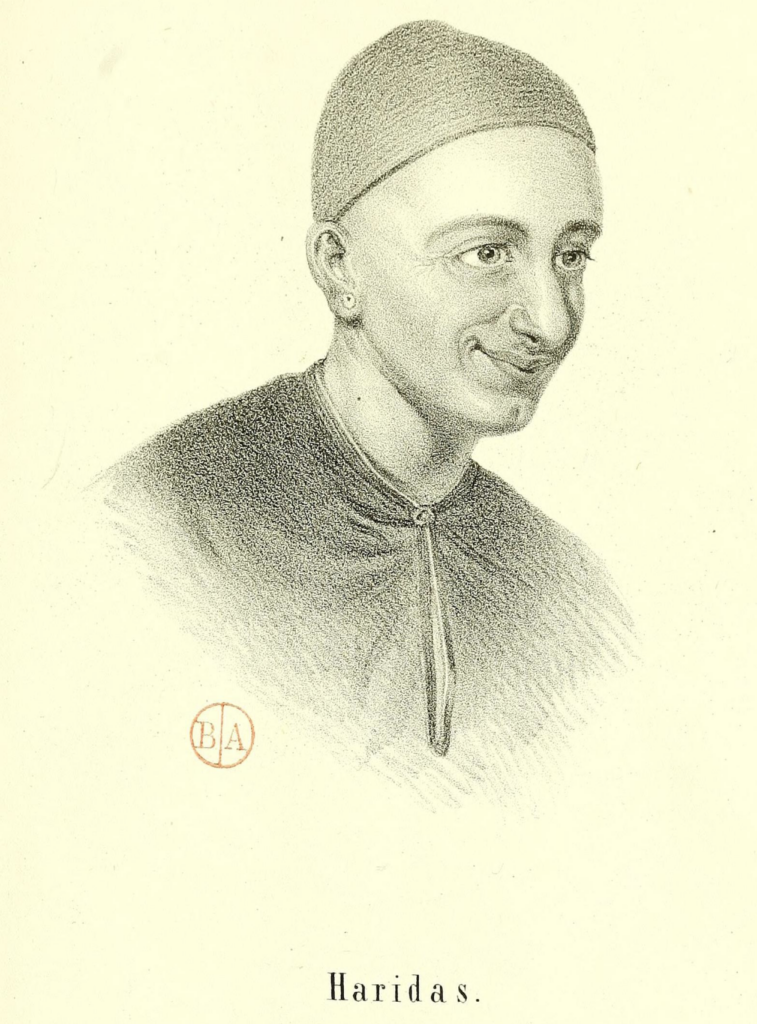
In 1837, at the court of Maharaja Ranjit Singh in Lahore, a yogi named Haridas was sealed into a wooden box and buried for forty days. He adopted a sitting posture, was covered and sewn into cerecloth, and placed in a case that was riveted shut and sealed with the Maharaja’s own seal.
The case went into a purpose-built brick vault. Earth was piled over it and the Maharaja’s guard kept watch, four sentries by day and eight by night.
Forty days later he was disinterred before the Maharaja, his court, and the French and British doctors who had witnessed the burial.
His apparently lifeless body was washed with hot water, massaged, and ghee placed on his eyelids and tongue.
Sir Claude Wade, the British Resident at the court, recorded that no more than half an hour passed between the box being opened and the recovery of speech, and that within another half hour Haridas was talking freely though feebly.
Wade wrote that the witnesses left convinced there had been no fraud or collusion.
What makes this unusual is who was watching.
Ranjit Singh conducted the burial under strict surveillance with maximum precaution against fraud, according to the Transylvanian physician Johann Martin Honigberger who documented it.
A crop of barley was sown over the vault, presumably so any disturbance of the earth would show.
Two details the devotional accounts omit.
The contemporary report proposed hibernation as the explanation rather than anything supernatural, and specifically regretted that no exact weights were taken before and after.
And after an earlier thirty-day burial in 1835, two English officers noted his greatly sunken abdomen.
Neither of those disproves anything. Both are the kind of observation that separates a record from a story.
#2 Ramana Maharshi and the Meteor Over Arunachala

The only account on this list with independent corroboration from people who had no connection to the ashram.
Ramana Maharshi died at Tiruvannamalai on 14 April 1950 at 8:47 pm. His breathing simply stopped, without struggle, with no other sign of death except that the next breath did not come.
At that exact minute an object described variously as a shooting star or meteor appeared on the horizon, moved slowly across the sky toward the sacred hill Arunachala, and disappeared behind its peak.
The French photographer Henri Cartier-Bresson had been staying at the ashram for two weeks.
He described seeing a vividly luminous shooting star with a tail unlike any he had seen before, coming from the south, moving slowly and vanishing behind Arunachala.
He and his companions immediately checked their watches. It was 8:47. They raced to the ashram to find the Maharshi had died at that minute.
Here is what separates this from ordinary devotional testimony. On 16 April all English and Tamil newspapers carried reports of the death and of the shooting star.
The phenomenon was seen across the state of Madras by large numbers of people in different places, most of whom had no idea anyone had died.
Encyclopedia.com records the event plainly, noting that at the precise moment of death a large star was seen to trail slowly across the sky, witnessed by Cartier-Bresson who was visiting at the time.
#3 Sri Aurobindo and the Five Days of Golden Light

An account where the community’s own record is more careful than the retelling.
Sri Aurobindo died at Pondicherry on 5 December 1950 at 1:26 am. By morning the body was described as suffused with a golden-crimson hue.
Devotees called it Supramental Light, and it was said to have remained for five days while thousands filed past for darshan. The body was finally placed in a rosewood casket on the evening of 9 December.
Dr P. K. Sanyal, who had attended him during his final illness and signed the death certificate alongside a French government physician, described looking at the body and finding no evidence of the slightest discoloration or decomposition.
Now the part that gets left out.
And K. D. Sethna, writing under the name Amal Kiran, titled his own section on the event No Utter Supernormality.
He wrote that when the body was placed in the case there was neither actual decay nor the odour of death, but that marks were present indicating the preservative light had begun to depart.
Sethna also did something almost nobody does with these claims.
He compared the duration against a reference work, noting the light remained in full for over ninety hours, which he described as more than double the record time given in Lyons’ Medical Jurisprudence for a body remaining undecayed in Eastern climatic conditions.
That is a writer inside the tradition being precise about the size of the claim. It is also more useful than any outside skepticism, because it comes with a benchmark.
#4 Paramahansa Yogananda and the Forest Lawn Letter

The most-quoted mahasamadhi in the West, and the one where the full document differs from the excerpt.
Yogananda died in Los Angeles on 7 March 1952. Harry T. Rowe, mortuary director at Forest Lawn Memorial-Park, sent Self-Realization Fellowship a notarised letter. The passages usually quoted are striking.
The absence of any visual signs of decay offered the most extraordinary case in their experience. No physical disintegration was visible even twenty days after death. No mould appeared on the skin and no desiccation took place in the tissues.
Mortuary personnel had expected to observe the usual progressive signs of decay through the glass casket lid, and their astonishment increased as day followed day without visible change.
Rowe described the state as a phenomenal state of immutability, unparalleled so far as they knew from mortuary annals.
The body was under daily observation from 11 March, the day of the last public rites, until 27 March when the bronze casket was sealed.
The complete notarised letter contains two things the published excerpts leave out.
The body was embalmed. And Rowe recorded observing a brown spot on the tip of the nose after twenty days.
What to make of that. Rowe’s statement is accurate. It is also incomplete as usually presented, and the omissions are not trivial ones. An embalmed body in 1952, kept without refrigeration, would not be expected to show dramatic decay in twenty days.
None of this makes Rowe dishonest. He wrote what he observed and he was a mortuary professional with no reason to exaggerate. The editing happened downstream.
Which is worth knowing if you have only ever read the three sentences.
#5 Shirdi Sai Baba and the Announced Departure

A case where the peculiarity is the timing rather than the body.
Sai Baba of Shirdi told some of his devotees in August 1918 that he would soon be leaving his mortal body. Towards the end of September he developed a high fever and stopped eating.
As his condition deteriorated he asked disciples to recite holy texts to him, while continuing to meet visitors.
He died on 15 October 1918.
The date is the detail. It coincided with Vijayadashami, the festival marking the victory of good over evil and, in tradition, an auspicious day for beginnings and for crossing over.
How much weight that carries depends entirely on what you already believe.
A prediction made roughly six weeks in advance, by a man in declining health, that he would die soon, is not extraordinary in itself.
Choosing a specific festival day is a different claim, and the record does not tell us whether he named the date or simply died on it.
Worth noting for its own sake: he was revered by Hindu and Muslim devotees alike during his lifetime, and his teaching centred on realisation of the self and a moral code of love, forgiveness and contentment rather than on any of this.
#6 Chaitanya Mahaprabhu and the Disappearance Nobody Recorded

The most peculiar entry here, because the peculiarity is an absence.
Chaitanya Mahaprabhu, the sixteenth-century Bengali saint whose movement eventually produced ISKCON, is said to have disappeared bodily in 1534 at Puri rather than dying in the ordinary sense. Various traditions place it at the Jagannath temple, or in the sea.
What is genuinely striking is what his biographers did not write.
Murari Gupta, Kavi Karnapur, Vrindavan Das Thakur and Krishnadas Kaviraj Goswami are the primary hagiographers of his life. None of them describes his disappearance.
Four contemporary and near-contemporary biographers, writing at length about a man they revered, and the final event is not in any of them.
That silence has been read two ways within the tradition itself. As deliberate reticence about something considered too sacred to record. Or as an indication that whatever happened did not lend itself to narration.
A parallel is drawn in the same tradition. The Bhagavata Purana, Vishnu Purana and Mahabharata all state that after Krishna’s departure no body was found.
We are noting a textual fact, not adjudicating it.
The absence of a record is a real feature of the sources and it is rarely mentioned in popular accounts, which tend to supply a version of the event with some confidence.
#7 Trailanga Swami Lived For Two Hundred and Eighty Years

Included because the sources contradict each other in a way worth seeing.
Trailanga Swami lived at Varanasi and was known as the walking Shiva of Kashi. Ramakrishna Paramahamsa said of him that although he had taken a body, he was Shiva himself.
Yogananda described him in Autobiography of a Yogi as a famous three-hundred-pound swami who rarely ate and lived unclothed, utterly unconscious of his nakedness.
He took the vow of ajachaka, not seeking, remaining satisfied with whatever came.
In his final years he adopted ajagaravritti, living like a python, sitting motionless while devotees poured water over him from morning until noon.
Now the dates.
Wikipedia gives his birth as 1607 and death as 26 December 1887, listing his age at death as 280 and cause of death as old age.
Other accounts state he resided at Varanasi between 1737 and 1887, which would make him roughly 150 there. Others say he lived over 300 years, of which 150 were in Varanasi.
His sannyasa initiation is dated to 1685, and he is described as reaching Prayag in 1733.
These cannot all be true. If he was born in 1607 and initiated in 1685, he was 78 at initiation, which sits awkwardly with accounts saying he met his guru around the age of forty after twenty years of practice.
Trailanga Swami existed. Ramakrishna met him. Photographs of him with Ramakrishna and Vivekananda hang at his temple on Panchganga Ghat.
What is uncertain is nearly everything numerical.
Summary Table
| Saint | Year | The claim | Evidence quality |
|---|---|---|---|
| Sadhu Haridas | 1837 | Buried alive 40 days, sealed and guarded | Strongest. British and French witnesses, contemporary written accounts, later academic study |
| Ramana Maharshi | 1950 | Meteor at the exact minute of death | Independently corroborated in newspapers across Madras state |
| Sri Aurobindo | 1950 | Body suffused with golden light, no decay 5 days | Eyewitness testimony including a physician. Community’s own record notes decomposition by day five |
| Paramahansa Yogananda | 1952 | No decay for 20 days | Notarised letter from mortuary director. Full letter records embalming and a brown spot on the nose |
| Shirdi Sai Baba | 1918 | Announced departure, died on Vijayadashami | Documented prediction roughly six weeks prior. Date coincidence not independently established |
| Chaitanya Mahaprabhu | 1534 | Bodily disappearance | No primary biographer records it. The absence is the documented fact |
| Trailanga Swami | 1887 | Lived 280 to 300 years | Sources contradict each other. Existence certain, chronology not |
Key Takeaways for Readers
What does mahasamadhi mean?
Mahasamadhi means great absorption and refers to a realised yogi’s conscious departure from the body at the time of physical death. The tradition holds that such a person chooses the moment rather than submitting to it. The word is also used for the tomb or shrine of a saint, which is a separate meaning.
Is there any documented evidence for mahasamadhi phenomena?
Some accounts have unusually good documentation. Sadhu Haridas was buried for forty days in 1837 before British and French witnesses, sealed by the Maharaja’s own seal and guarded day and night, with Sir Claude Wade recording his account in writing. A meteor at the moment of Ramana Maharshi’s death in 1950 was reported in English and Tamil newspapers across Madras state. Others rest on devotional testimony alone.
Did Yogananda’s body really not decay for twenty days?
The notarised letter from Forest Lawn mortuary director Harry T. Rowe states that no physical disintegration was visible twenty days after death, and describes the state as unparalleled in mortuary annals. The complete letter also records that the body was embalmed and that Rowe observed a brown spot on the nose after twenty days. Both details are omitted from the excerpts usually published.
What happened when Ramana Maharshi died?
He died at Tiruvannamalai on 14 April 1950 at 8:47 pm. At that minute a luminous object described as a shooting star or meteor crossed the sky and disappeared behind the hill Arunachala. Henri Cartier-Bresson witnessed it and checked his watch. Newspapers across Madras state carried reports two days later from many people in different locations who had seen it.
Did Sri Aurobindo’s body really not decompose?
Devotees reported the body suffused with a golden-crimson light for around five days, and Dr P. K. Sanyal, who signed the death certificate, found no discoloration or decomposition initially. However, an ashram account records Sanyal stating on the ninth that decomposition had set in, and the writer Amal Kiran noted marks indicating the preservation had begun to fade, comparing the duration to a figure from Lyons’ Medical Jurisprudence.
How did Chaitanya Mahaprabhu die?
Tradition holds that he disappeared bodily in 1534 at Puri rather than dying conventionally. The peculiar feature is that his four primary biographers, Murari Gupta, Kavi Karnapur, Vrindavan Das Thakur and Krishnadas Kaviraj Goswami, do not describe the event at all. That silence has been read within the tradition either as deliberate reticence or as an indication the event resisted narration.
What is the difference between samadhi and mahasamadhi?
Samadhi in the yogic sense is a state of absorption reached in meditation, described as the eighth and final limb in Patanjali’s system. Mahasamadhi refers specifically to the final departure from the body at death. Confusingly, samadhi is also the word for a saint’s tomb or memorial shrine, which is why the term appears in three quite different contexts.
References
Sadhu Haridas
Sadhu Haridas. Wikipedia, including Claude Wade’s account
https://en.wikipedia.org/wiki/Sadhu_Haridas
Hatha Yoga, Live Burial, and Human Hibernation: How the West Misconceptualized the Samadhis of Yogi Haridas
https://www.researchgate.net/publication/380245359_Hatha_Yoga_Live_Burial_and_Human_Hibernation_How_the_West_MisConceptualized_the_Samadhis_of_Yogi_Haridas_in_the_Nineteenth_and_the_Early_Twentieth_Centuries
Ramana Maharshi
Ebert G. Ramana Maharshi: His Life, chapter on 14 April 1950 and the funeral
http://ramanabiography.blogspot.com/2008/09/164-14th-april-1950-and-funeral.html
Ramana Maharshi, Sri (1879-1950). Encyclopedia.com
https://www.encyclopedia.com/science/encyclopedias-almanacs-transcripts-and-maps/ramana-maharshi-sri-1879-1950
Sri Aurobindo
Sri Aurobindo’s Mahasamadhi Day. Sri Aurobindo Study and Practice
https://sasp.collaboration.org/activities/december-5/
Sethna KD (Amal Kiran). The Passing of Sri Aurobindo: Its Inner Significance
https://renaissance.aurosociety.org/the-passing-of-sri-aurobindo-its-inner-significance-part-1/
Sri Aurobindo’s Passing, including Udar Pinto’s account
https://auromaa.org/sri-aurobindos-passing/
Paramahansa Yogananda
The Miracle at Forest Lawn, extracts from the Forest Lawn letter
https://yoganandasite.wordpress.com/2017/02/28/the-miracle-at-forest-lawn-yoganandas-incorrupt-body/
Paramahansa Yogananda’s Complete Mortuary Report, the full notarised letter
http://oaks.nvg.org/soy22.html
Shirdi Sai Baba
Sai Baba of Shirdi. Wikipedia
https://en.wikipedia.org/wiki/Sai_Baba_of_Shirdi
Chaitanya Mahaprabhu
Disappearance of Sri Chaitanyadev. Sri Gauranga Ashram
https://www.srigaurangashram.in/Disappearance%20of%20Sri%20Chaitanyadev.html
Trailanga Swami
Trailanga. Wikipedia
https://en.wikipedia.org/wiki/Trailanga
Trailanga Swami, Lord of Varanasi
https://www.mahasarameditation.com/trailanga-swami/