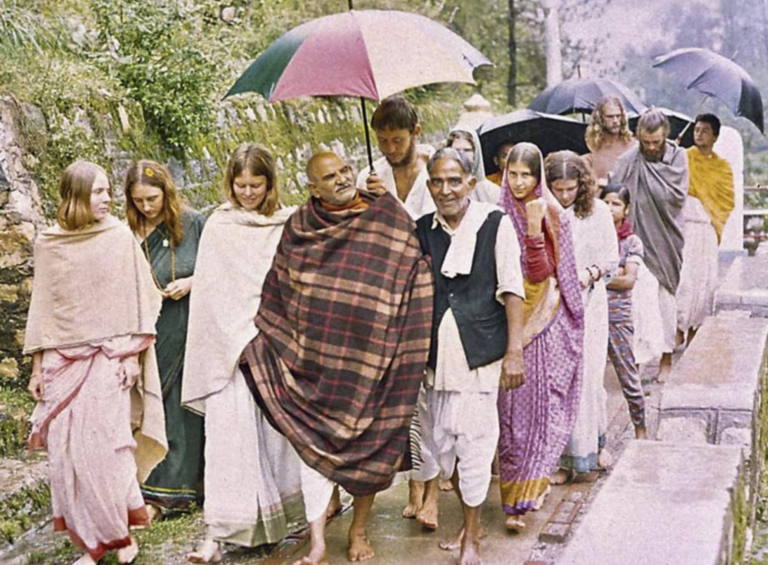
Shri Premanand Maharaj on Inner Peace
Shri Premanand Maharaj says a true seeker does not ask God for wealth, status, or the praise of others. They ask only for love. A love that does not depend on being noticed, admired, or constantly reassured. And from that love, something beautiful quietly appears: inner peace.
Most people spend years chasing recognition. We want appreciation for our efforts. We want our existence acknowledged. We want to feel important. There is something deeply human about that desire. But Shri Premanand Maharaj reminds us that anything built entirely on praise will eventually leave the heart restless.
What remains when the applause fades is the real question.
The Essential Takeaway
Premanand Maharaj teaches that true devotion begins when a person stops asking life for constant validation. A real devotee does not pray only for wealth, status, admiration, or success. They ask for love and surrender. This teaching is not about rejecting the world or becoming emotionless. It is about no longer depending completely on outside approval to feel worthy. The moment a person stops measuring themselves through praise, comparison, and recognition, emotional pressure begins to soften. What remains is not emptiness. It is inner peace. Quiet, stable, and deeply personal.
What Does Premanand Maharaj Mean by “True Devotion”?
Premanand Maharaj describes true devotion as love without transaction.
Most people approach spirituality carrying hidden expectations. Better health. More success. Emotional relief. Respect from society. Some even seek spirituality hoping it will make them appear wiser or more pure.
But true devotion moves differently.
According to Premanand Maharaj, devotion becomes real when love exists even without reward. The devotee no longer asks:
- What will I get?
- Will my problems disappear?
- Will people admire me?
Instead, devotion becomes presence itself.
Premanand Maharaj often says:
“If devotion exists only while life is favorable, it is attachment, not surrender.”
That sentence touches something emotional because many people secretly know how conditional their faith becomes during difficulty. True devotion is a spiritual state where love for the divine exists independent of reward, recognition, or external gain.
What most articles miss about devotion is that it is not emotional weakness. Real devotion actually removes dependency on unstable external things.
This teaching also connects beautifully with our article on why meditation feels difficult for beginners, because both paths eventually ask the same – remaining present without constantly demanding results.
Why Does a True Seeker Not Ask for Wealth or Praise?
Premanand Maharaj does not teach hatred toward wealth or success. He teaches freedom from emotional dependence on them.
Wealth can disappear. Praise can turn into criticism overnight. Status changes faster than people expect.
The deeper problem begins when identity becomes attached to these things. Once emotional security depends on external validation, fear quietly enters the mind.
Fear of failure. Fear of rejection. Fear of becoming invisible.
A 2025 report from the Organisation for Economic Co operation and Development found rising emotional stress connected to social comparison and digital validation culture among younger adults.¹
That emotional pressure is becoming impossible to ignore.
Kulwinder, who writes about spiritual psychology and modern emotional wellbeing for The Inner Path, explains that many people today are emotionally exhausted not because they lack achievement, but because they never feel internally complete despite achievement.
Premanand Maharaj’s teaching interrupts this cycle completely.
He suggests that peace begins when a person stops building their worth entirely around how loudly the world applauds them.
That truth feels uncomfortable because it touches a very personal wound many people carry silently.
How Is This Teaching Connected to Inner Peace?
Inner peace becomes possible when the mind no longer depends completely on approval.
That is the deeper meaning behind Premanand Maharaj’s teaching.
Most emotional exhaustion today is invisible. People constantly perform versions of themselves:
- Trying to appear successful
- Trying to appear attractive
- Trying to appear spiritual
- Trying to appear important
That constant self management creates inner tension.
Premanand Maharaj’s teachings slowly dissolve this pressure. When devotion becomes rooted in love rather than recognition, emotional energy stops scattering outward all the time. Attention becomes quieter. Simpler. More inward.
Inner peace is the emotional stability that appears when identity no longer depends entirely on comparison, praise, or social approval.
This idea aligns strongly with modern psychological research. A 2024 article published by Stanford Lifestyle Medicine explained that emotional wellbeing improves when people cultivate intrinsic meaning rather than constant external validation.²
What most articles miss about inner peace is that it rarely appears through force. It usually appears when unnecessary psychological struggle finally softens.
And sometimes, that softening feels deeply emotional. Almost like finally putting down a weight you carried for years without realizing it.
What Is the Difference Between Worldly Love and Divine Love?
Premanand Maharaj often explains that worldly love usually carries expectation underneath it.
People want :
Reassurance. Attention. Possession. Loyalty. Recognition.
That does not make human love wrong. It simply makes it fragile. Divine love moves differently. It is not built entirely on emotional bargaining.
Premanand Maharaj says:
“Where there is demand, fear enters. Where there is surrender, peace enters.”
That single line explains the difference beautifully.
Worldly attachment often creates anxiety because it fears loss constantly. Divine love creates peace because it is rooted in surrender rather than control.
Divine love is a spiritual experience rooted in surrender, presence, and connection rather than possession or emotional transaction.
This teaching connects deeply with Bhakti traditions across Indian spirituality where love itself becomes the path.
Readers interested in deeper awareness teachings may also explore our article on consciousness in yogic philosophy.
How Can Letting Go of Praise Lead to Inner Peace?
Praise feels wonderful for a moment. That is why it becomes addictive.
The problem is not appreciation itself. The problem begins when emotional stability starts depending on constant appreciation.
The moment identity depends on applause:
- Criticism feels unbearable
- Silence feels threatening
- Comparison becomes constant
- Anxiety quietly increases
Modern digital culture intensifies this cycle every day.
A 2025 study from the Digital Wellness Lab at Boston Children’s Hospital found that constant exposure to validation driven social platforms contributes significantly to emotional insecurity and self comparison behaviors among younger users.³
Premanand Maharaj’s teaching moves in the exact opposite direction.
He encourages people to:
- Do sincere work
- Love deeply
- Remain humble
- But stop measuring their worth through reaction
Kulwinder Singh, who writes about meditation and emotional awareness for The Inner Path, describes this beautifully:
“Peace begins the moment your value no longer rises and falls with applause.”
That sentence feels deeply true because almost everyone has experienced the emptiness that follows temporary validation.
What Does Premanand Maharaj Say About Inner Peace?
Premanand Maharaj describes inner peace not as something dramatic, but as something natural that appears when craving slowly weakens.
People often imagine peace as a mystical experience. But his teachings usually point toward ordinary moments:
- A quieter mind
- Less comparison
- Less emotional dependence
- Less desperation for recognition
He frequently reminds listeners:
“The mind becomes peaceful when it stops running behind what cannot stay.”
That insight feels especially relevant in 2026 because modern life constantly rewards dissatisfaction. There is always another achievement to chase. Another image to maintain. Another version of success to perform.
A 2025 report from the Mental Health Foundation discussed how comparison culture and achievement pressure continue increasing emotional fatigue globally.⁴
Premanand Maharaj offers a radically different direction.
Instead of becoming more visible, become more inwardly steady. Instead of demanding constant reassurance, learn to remain emotionally present without it.
That is where inner peace quietly begins.
Summary: True Devotion as Freedom from External Validation
| Seeking External Validation | Seeking True Devotion & Inner Peace |
|---|---|
| Asks for wealth | Asks for love only |
| Seeks status | Seeks nothing external |
| Wants praise from others | Unconcerned with praise |
| Attached to outcomes | Surrenders outcomes |
| Driven by fear and anxiety | Rooted in inner peace |
| Feels empty after achievement | Feels whole without achievement |
FAQs
What does Premanand Maharaj mean by true devotion?
Premanand Maharaj describes true devotion as love for the divine without transaction or constant expectation. A true devotee does not approach spirituality only for wealth, praise, or success. Devotion becomes centered on surrender, love, and inner connection.
How is devotion connected to inner peace?
Devotion creates inner peace when emotional stability stops depending completely on comparison, validation, and outcomes. The mind becomes calmer when worth is no longer measured entirely through external reactions.
Why does Premanand Maharaj warn against seeking praise?
According to Premanand Maharaj, dependence on praise creates emotional instability because approval constantly changes. When identity becomes dependent on recognition, peace becomes fragile and emotionally exhausting.
What is the difference between worldly love and divine love?
Worldly love often contains attachment, expectation, and emotional demand. Divine love, according to Premanand Maharaj, is rooted in surrender, presence, and unconditional connection.
Can letting go of validation reduce anxiety?
Yes. Psychological studies in 2024 and 2025 increasingly connect social comparison and validation seeking behaviors with emotional stress, insecurity, and anxiety.
Is inner peace possible without rejecting worldly life?
Premanand Maharaj’s teachings do not ask people to abandon life or relationships. Instead, they encourage freedom from emotional dependence on unstable external conditions.
Finally, What matters the most?
Premanand Maharaj’s teaching is ultimately simple, but emotionally powerful: peace begins when love no longer depends on reward.
Praise fades. Recognition shifts. Status changes. But when devotion becomes rooted in surrender rather than performance, something inside finally becomes quieter.
Perhaps that is why inner peace often feels less like gaining something new and more like finally releasing something heavy.
Explore more reflections on devotion, meditation, and emotional wellbeing on The Inner Path.
References
- OECD. How’s Life? 2025 Measuring Well Being
https://www.oecd.org/en/publications/how-s-life-2025_7b1a1e2f-en.html - Stanford Lifestyle Medicine. Intrinsic Motivation and Emotional Wellbeing
https://longevity.stanford.edu/lifestyle/2024/01/23/intrinsic-motivation-and-wellbeing/ - Digital Wellness Lab at Boston Children’s Hospital. Social Media and Adolescent Emotional Health Report 2025
https://digitalwellnesslab.org/impact-reports/2025-impact-report/ - Mental Health Foundation. Mental Health Statistics: Stress and Comparison Culture 2025
https://www.mentalhealth.org.uk/explore-mental-health/statistics